Tell us about the job
Takes about a minute. No obligation.
A furnace contractor quoting a job in Payne County has to size the equipment to what this area actually runs against, and that is a different question than picking a unit from a catalog. 171 severe weather events were recorded in Payne County, Oklahoma between 2015 and 2024. At that rate, severe weather is part of the normal operating life of any heating system installed here, which means the sizing calculation and the quality of the installation determine how well the system holds up when conditions push hardest. A furnace undersized for this climate will cycle harder and wear faster than the manufacturer's ratings assume.
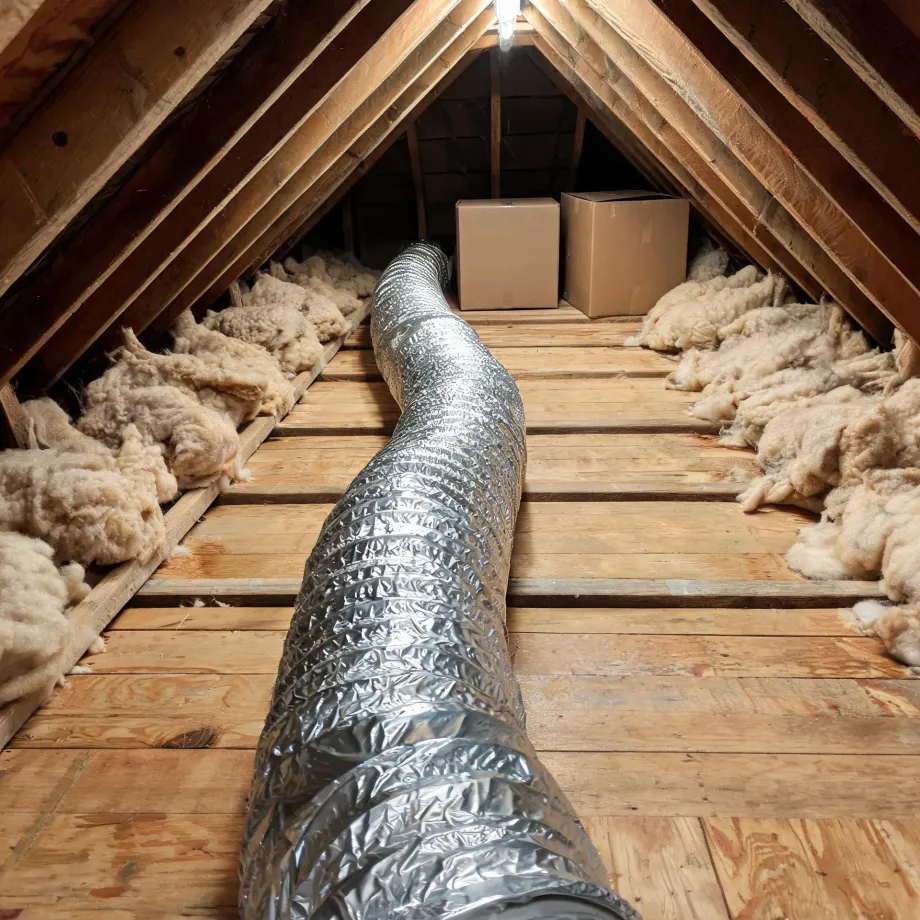
Ductwork laid down for an older furnace carries assumptions about static pressure and airflow that a new unit may not match. Half the homes in Payne County, Oklahoma were built in 1984 or earlier (2020-2024 ACS 5-year). A contractor quoting a furnace replacement here has to assess that existing duct system before the new equipment can be priced accurately, because a trunk that was right for the old unit may be undersized, oversized, or routed in a way that chokes the new one. The electrical service matters too, but in stock of this age the duct layout is where most of the unknowns sit.
What a Furnace Installation Covers
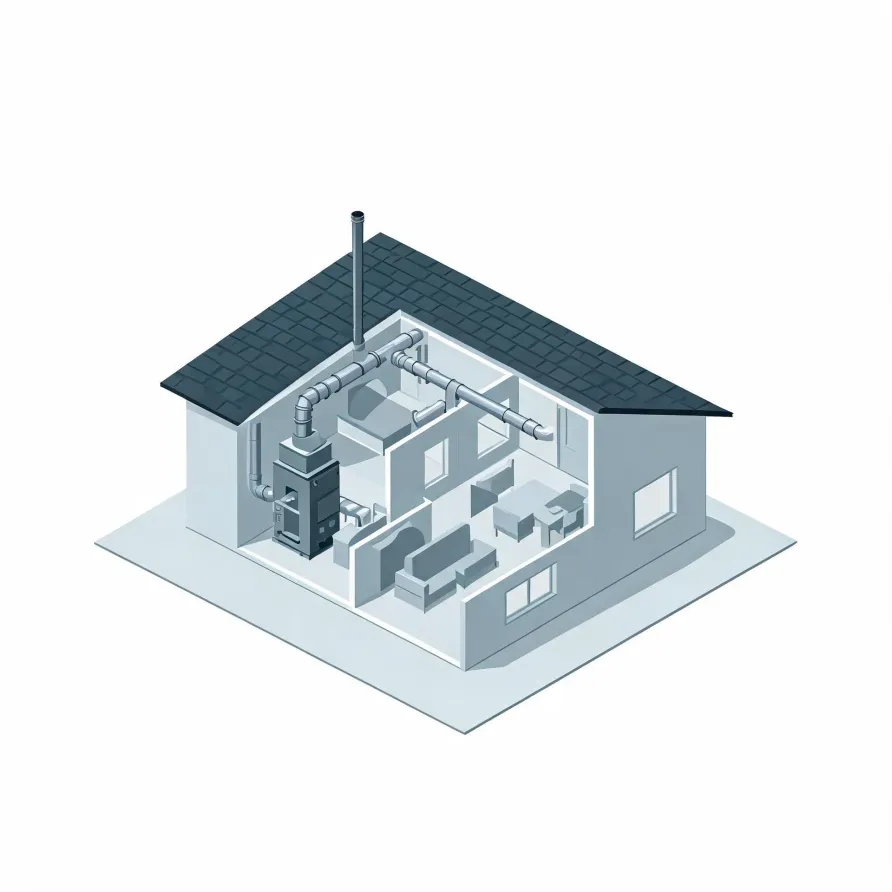
The furnace itself sits inside the house, most often in a basement, utility room, or closet, and it is the unit that produces the heat. Attached to it is the air handler, which moves conditioned air through the home. Together these two pieces are the core of what a contractor brings in and sets in place.
The thermostat goes on an interior wall where it can read the home's temperature and signal the furnace to run or stop. A flue or venting pipe runs from the furnace to an exterior wall or through the roof to carry combustion gases out of the house.
The drawing shows a typical layout, and a licensed contractor determines exactly what applies to your home.
Get matched in Payne CountyPayne County, by the numbers
171 severe weather events were recorded in Payne County, Oklahoma between 2015 and 2024.
NOAA National Centers for Environmental Information, Storm Events Database, bulk CSV export, events 2015-01-01 through 2024-12-31.Half the homes in Payne County, Oklahoma were built in 1984 or earlier (2020-2024 ACS 5-year).
U.S. Census Bureau, 2020-2024 American Community Survey 5-Year EstimatesPayne County, Oklahoma holds 37,069 housing units (2020-2024 ACS 5-year).
U.S. Census Bureau, 2020-2024 American Community Survey 5-Year EstimatesOwners occupy 51.0% of the occupied homes in Payne County, Oklahoma (2020-2024 ACS 5-year).
U.S. Census Bureau, 2020-2024 American Community Survey 5-Year EstimatesFurnace Installation Rules on the Books for Payne County, Oklahoma6 sourced standards and codes
What the installation looks like
Non-weatherized gas furnaces manufactured on or after November 19, 2015 must reach 80.0 percent AFUE.
Non-weatherized oil-fired furnaces manufactured on or after November 19, 2015 must reach 83.0 percent AFUE.
Mobile home gas furnaces manufactured on or after November 19, 2015 must reach 80.0 percent AFUE.
Non-weatherized gas furnaces manufactured on or after December 18, 2028 must reach 95.0 percent AFUE, up from the 80.0 percent minimum that applies to units manufactured before that date.
Licensing and Legal Requirements in Payne County, Oklahoma
An Oklahoma mechanical licence is valid statewide, and a contractor licensed by a local authority who works only in that locality is not required to hold the state licence at all.
Oklahoma requires a Construction Industries Board licence for mechanical work: nobody may do or advertise mechanical work as a journeyman or contractor without the right licence.
Severe Weather Events in Payne County
Oklahoma weather puts real load on heating equipment, and Payne County conditions shape what a furnace here has to handle year after year. That makes local weather history relevant to any installation decision, not just a backdrop.
171 severe weather events, 2015–2024. Source: NOAA National Centers for Environmental Information, Storm Events Database.