Tell us about the job
Takes about a minute. No obligation.
A furnace repair in Pittsburg County starts with a question the county's weather record makes harder to skip: which parts wore under load and which simply aged out. 147 severe weather events were recorded in Pittsburg County, Oklahoma between 2015 and 2024. At that rate, heat exchangers, igniters, and limit switches have been cycling through the kind of thermal stress that shows up as cracks, premature trips, and carbon buildup. A contractor who skips that assessment quotes the visible failure and misses what drove it.
Furnaces in houses across Pittsburg County have been replaced, patched, and swapped out across decades of ownership changes, so what sits in the mechanical room now is not what the house was built with. Half the homes in Pittsburg County, Oklahoma were built in 1979 or earlier (2020-2024 ACS 5-year). That gap matters for repair work because a contractor opening a furnace here has to go by what the heat exchanger, burners, and controls actually show, not by any assumption built from the address. A cracked exchanger is a cracked exchanger whether the house is old or recent; a failed igniter or a failed control board each points to a different repair and a different part availability question.
The Parts of a Furnace a Contractor Checks First
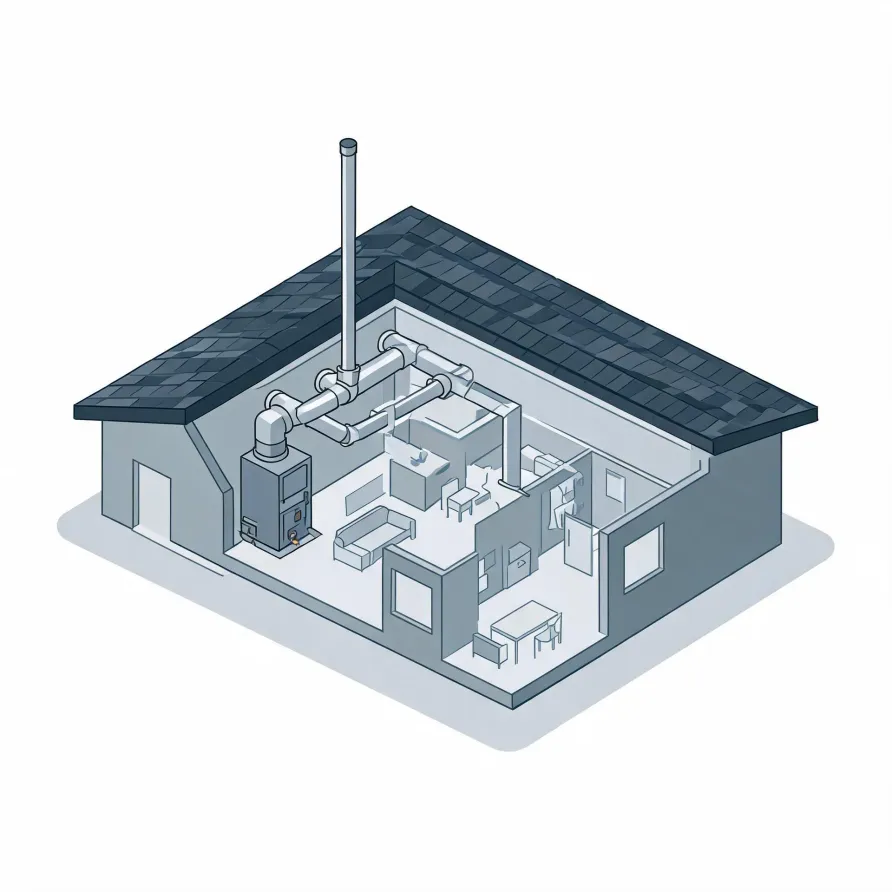
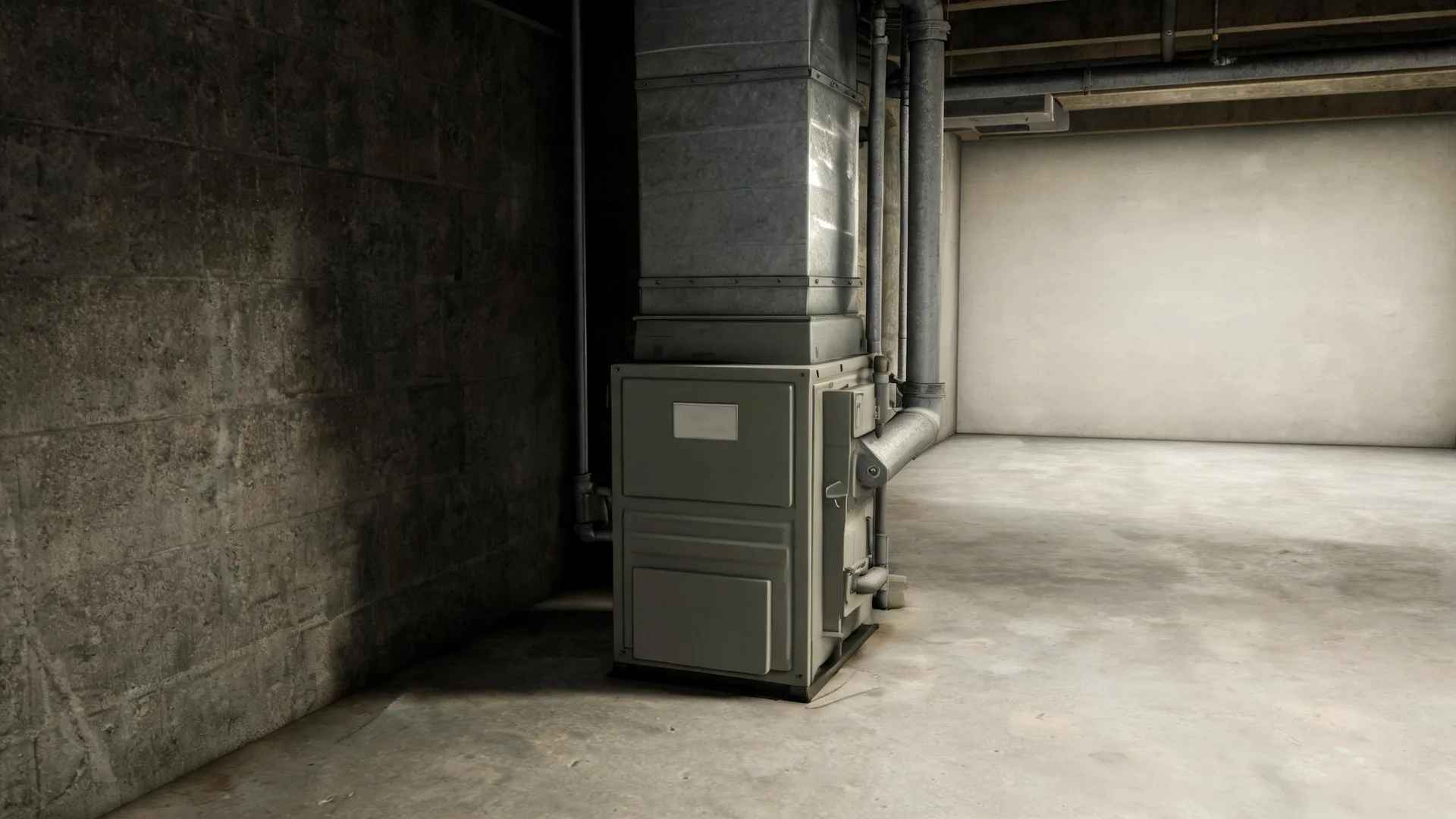
The furnace itself sits in the basement, utility room, or crawl space and is the piece a contractor goes to first. Inside it, the heat exchanger and the burner assembly are the usual suspects when heat is lost or the unit shuts down unexpectedly. A cracked heat exchanger or a burner that will not stay lit accounts for a large share of furnace calls.
The blower motor sits inside the furnace cabinet and pushes conditioned air through the house. Near it, the control board and the igniter are small parts that carry a lot of responsibility. The flue pipe runs from the furnace up and out of the house, and a contractor checks it alongside the internal components because a blockage or a separation there affects how the whole system runs.
The drawing shows the general layout of a furnace system, and a licensed contractor determines what applies to the specific equipment and configuration in your house.
Get matched in Pittsburg CountyPittsburg County, by the numbers
147 severe weather events were recorded in Pittsburg County, Oklahoma between 2015 and 2024.
NOAA National Centers for Environmental Information, Storm Events Database, bulk CSV export, events 2015-01-01 through 2024-12-31.Half the homes in Pittsburg County, Oklahoma were built in 1979 or earlier (2020-2024 ACS 5-year).
U.S. Census Bureau, 2020-2024 American Community Survey 5-Year EstimatesPittsburg County, Oklahoma holds 22,252 housing units (2020-2024 ACS 5-year).
U.S. Census Bureau, 2020-2024 American Community Survey 5-Year EstimatesOwners occupy 71.4% of the occupied homes in Pittsburg County, Oklahoma (2020-2024 ACS 5-year).
U.S. Census Bureau, 2020-2024 American Community Survey 5-Year EstimatesCodes & Standards Behind Furnace Repair in Pittsburg County, Oklahoma6 sourced rules & standards
What the repair visit looks like
Non-weatherized gas furnaces manufactured on or after November 19, 2015 must reach 80.0 percent AFUE.
Non-weatherized oil-fired furnaces manufactured on or after November 19, 2015 must reach 83.0 percent AFUE.
Mobile home gas furnaces manufactured on or after November 19, 2015 must reach 80.0 percent AFUE.
Non-weatherized gas furnaces manufactured on or after December 18, 2028 must reach 95.0 percent AFUE, up from the 80.0 percent minimum that applies to units manufactured before that date.
Licensing and Legal Requirements in Pittsburg County, Oklahoma
An Oklahoma mechanical licence is valid statewide, and a contractor licensed by a local authority who works only in that locality is not required to hold the state licence at all.
Oklahoma requires a Construction Industries Board licence for mechanical work: nobody may do or advertise mechanical work as a journeyman or contractor without the right licence.
Severe Weather Events in Pittsburg County
Hard weather puts furnaces to work, and the cycles of stress that follow a rough season accelerate wear on heat exchangers, igniters, and controls. Repair demand in Pittsburg County tracks local conditions, which is why the weather record here matters to anyone keeping a furnace running.
147 severe weather events, 2015–2024. Source: NOAA National Centers for Environmental Information, Storm Events Database.