Tell us about the job
Takes about a minute. No obligation.
A contractor quoting furnace repair in Ellis County is not walking into a system that has been battered by an outlier climate. 105 severe weather events were recorded in Ellis County, Oklahoma between 2015 and 2024. That puts this area near the midpoint of counties nationally, which means severe weather here is real but not the dominant stress on a heating system. A furnace that is failing has most likely been undone by age, neglected filters, or a component that was wearing quietly for years. The weather record gives a contractor context, but it does not steer the diagnosis away from the equipment itself.
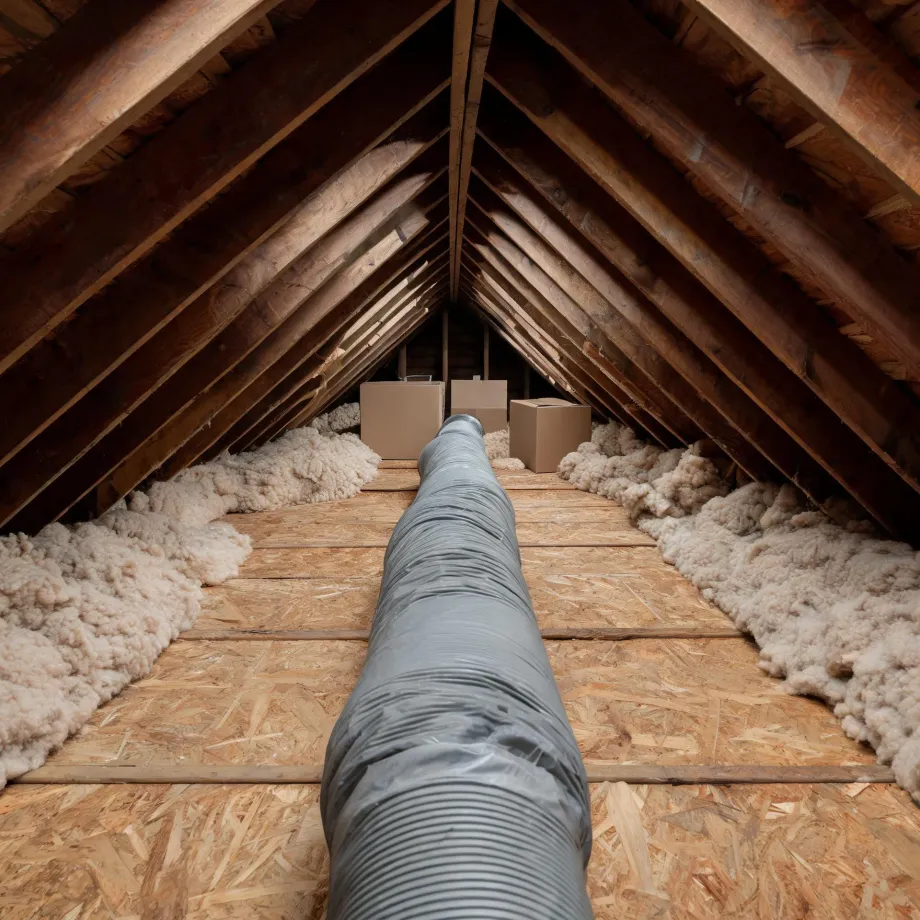
Ductwork and wiring in houses this old were roughed in for equipment that no longer exists, and the furnaces running in them today came later. Half the homes in Ellis County, Oklahoma were built in 1969 or earlier (2020-2024 ACS 5-year). When a furnace in stock like this fails, what a contractor finds once the heat exchanger or burner assembly is open is a system that has already been adapted at least once. The question that decides the repair is whether the manufacturer still makes the part that system takes. If the answer is no, the job changes before a price is set.
The Parts of a Furnace a Contractor Checks First
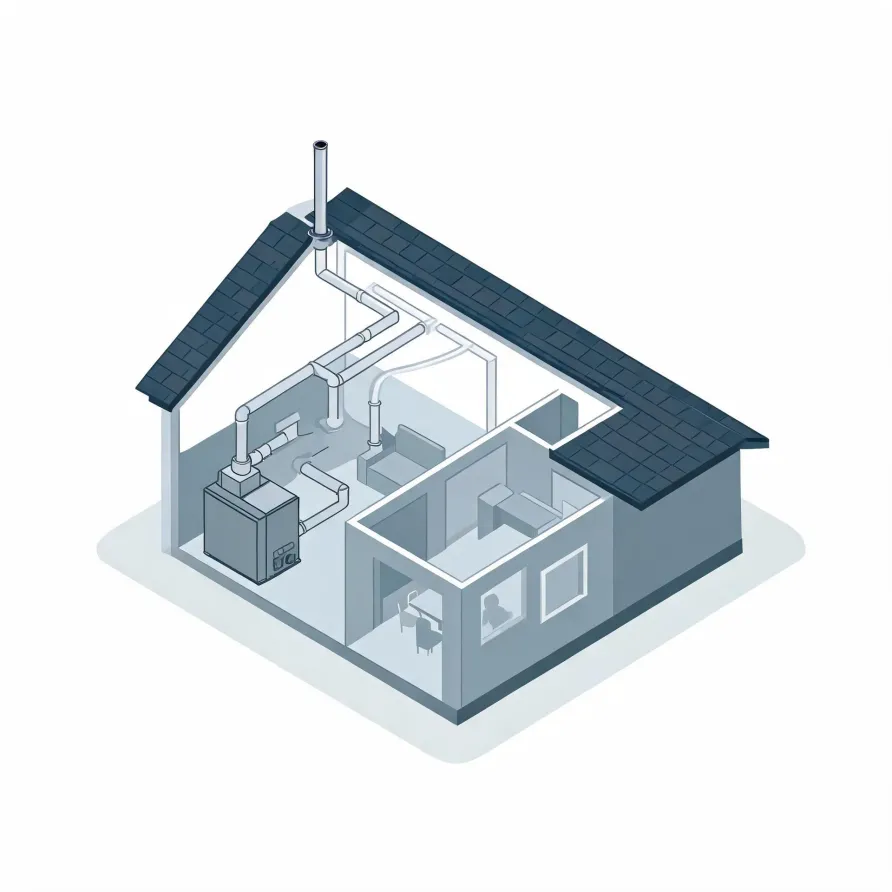
The furnace itself sits in the basement, utility room, or closet and is the piece a contractor goes to first. Inside it, the heat exchanger is the part most likely to be at the root of a heating failure or a safety concern. The burners, which fire inside that exchanger, and the igniter, which lights them, are the other components a contractor examines early.
The blower motor moves conditioned air out through the supply side of the duct system and draws return air back in. Alongside it, the flue or exhaust vent runs from the furnace to an outside wall or roof and carries combustion gases out of the house. The thermostat on an interior wall is where a contractor checks whether the controls are reading and signaling correctly.
The drawing shows a typical furnace layout, and a licensed contractor determines which parts apply to your specific house and system.
Get matched in Ellis CountyEllis County by the numbers
105 severe weather events were recorded in Ellis County, Oklahoma between 2015 and 2024.
NOAA National Centers for Environmental Information, Storm Events Database, bulk CSV export, events 2015-01-01 through 2024-12-31.Half the homes in Ellis County, Oklahoma were built in 1969 or earlier (2020-2024 ACS 5-year).
U.S. Census Bureau, 2020-2024 American Community Survey 5-Year EstimatesEllis County, Oklahoma holds 2,127 housing units (2020-2024 ACS 5-year).
U.S. Census Bureau, 2020-2024 American Community Survey 5-Year EstimatesOwners occupy 82.1% of the occupied homes in Ellis County, Oklahoma (2020-2024 ACS 5-year).
U.S. Census Bureau, 2020-2024 American Community Survey 5-Year EstimatesCodes & Standards Governing Furnace Repair in Ellis County, Oklahoma6 sourced rules and standards
What HVAC Repair Looks Like in Ellis County
Non-weatherized gas furnaces manufactured on or after November 19, 2015 must reach 80.0 percent AFUE.
Non-weatherized oil-fired furnaces manufactured on or after November 19, 2015 must reach 83.0 percent AFUE.
Mobile home gas furnaces manufactured on or after November 19, 2015 must reach 80.0 percent AFUE.
Non-weatherized gas furnaces manufactured on or after December 18, 2028 must reach 95.0 percent AFUE, up from the 80.0 percent minimum that applies to units manufactured before that date.
What Ellis County, Oklahoma Requires for HVAC Repair Work
An Oklahoma mechanical licence is valid statewide, and a contractor licensed by a local authority who works only in that locality is not required to hold the state licence at all.
Oklahoma requires a Construction Industries Board licence for mechanical work: nobody may do or advertise mechanical work as a journeyman or contractor without the right licence.
Severe Weather Events in Ellis County
Hard weather puts real load on a furnace. Every temperature swing, power surge, or sustained cold stretch adds hours to the equipment's running time, and that wear shows up as repair calls.
105 severe weather events, 2015–2024. Source: NOAA National Centers for Environmental Information, Storm Events Database.