Tell us about the job
Takes about a minute. No obligation.
A furnace repair here starts with a question most counties do not force: how much of what the contractor finds is load-driven and how much is just age. 153 severe weather events were recorded in Pottawatomie County, Oklahoma between 2015 and 2024. At that pace, a system has been running against real seasonal stress, and components like heat exchangers, igniters, and blower motors carry that in ways that show up during a diagnostic. A contractor who skips that step can price the wrong repair.
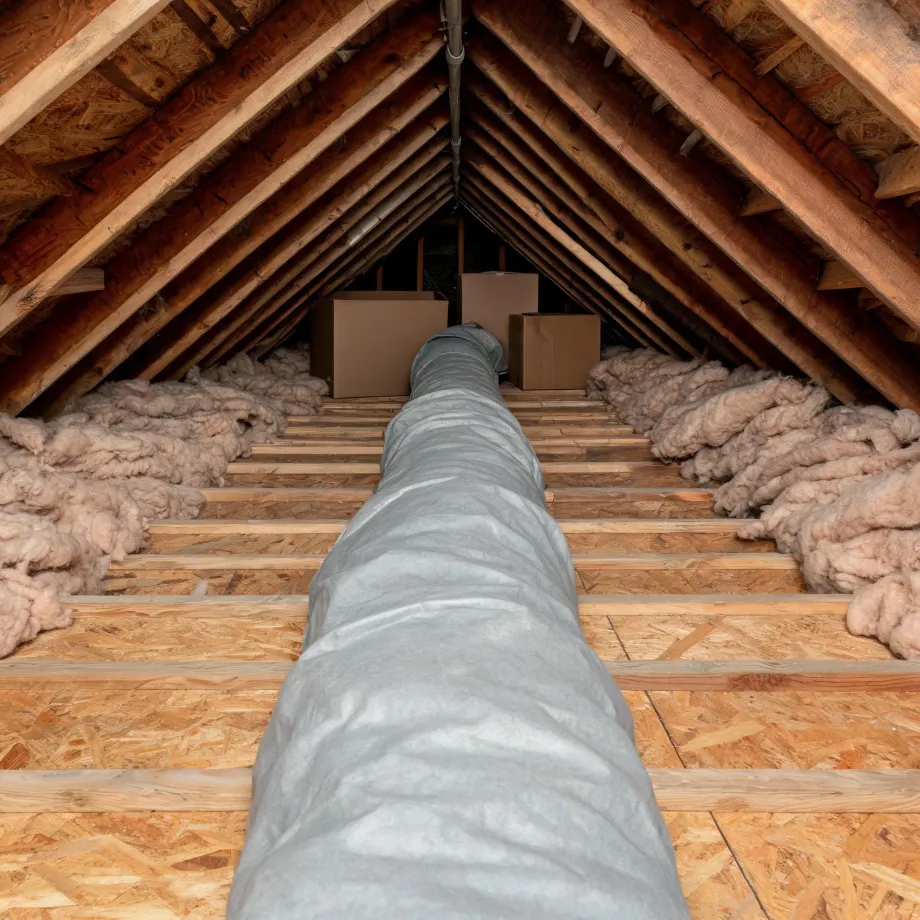
Ductwork laid for one furnace and now carrying another accumulates mismatches that only open access reveals: a heat exchanger cracked along a seam worn by cycles of expansion, a flue connection that no longer fits cleanly, a gas valve whose replacement part a supplier has to locate rather than pull from the shelf. Half the homes in Pottawatomie County, Oklahoma were built in 1980 or earlier (2020-2024 ACS 5-year). That age of stock means a repair here is as much about what surrounds the furnace as what is wrong with it. A licensed contractor opens the unit, checks the heat exchanger, traces the venting, and prices the job from what those things actually show.
The Parts of a Furnace a Contractor Checks First
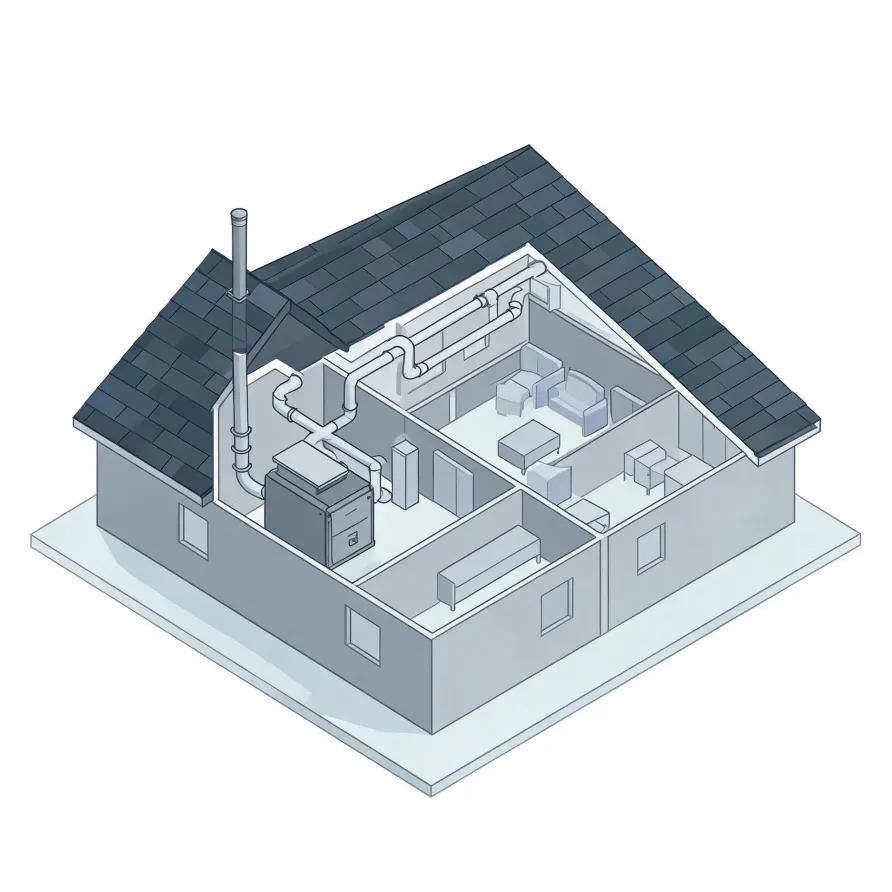
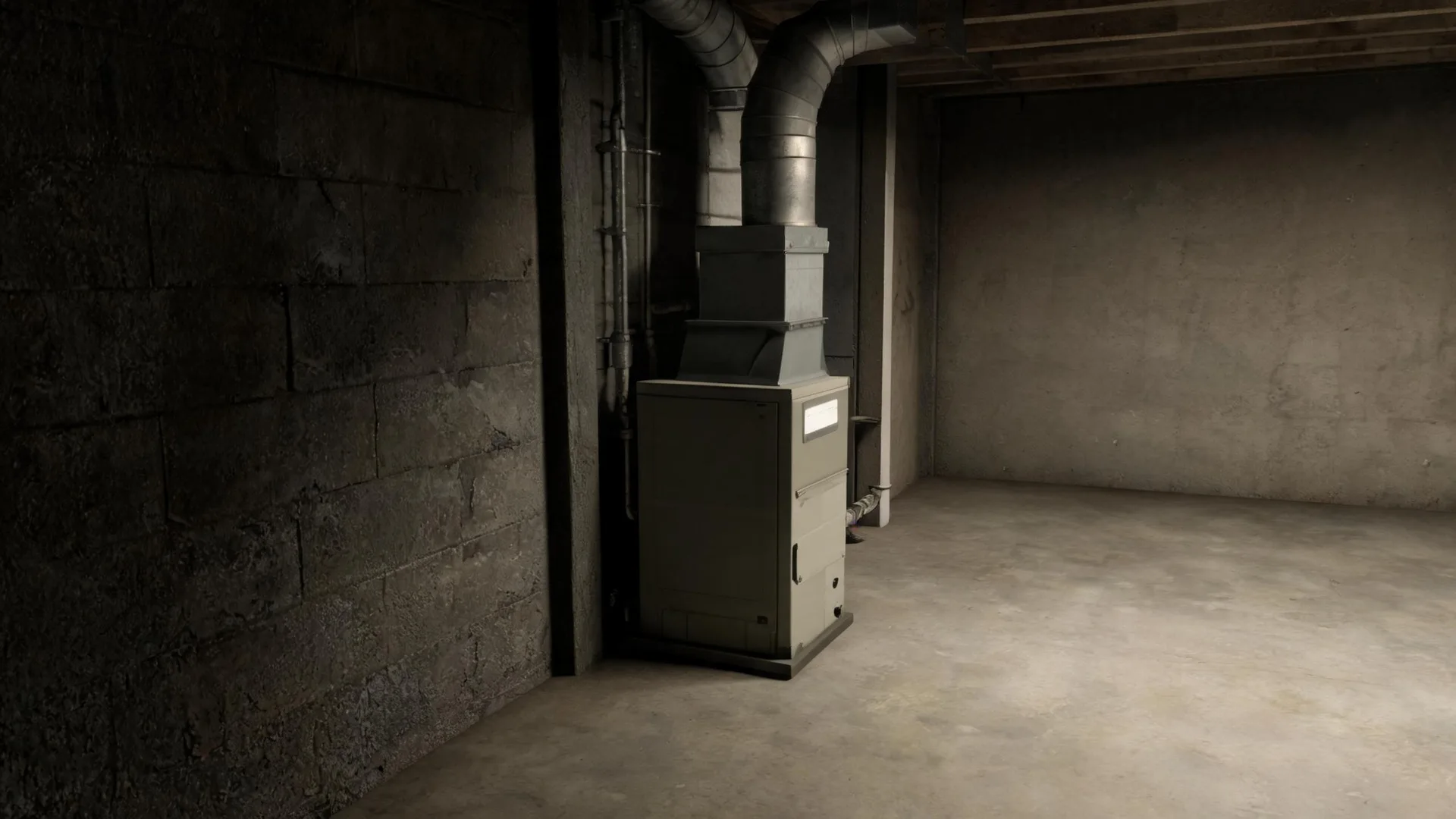
The furnace itself sits in a utility space, basement, or closet and is the piece a contractor goes to first. Inside it, the heat exchanger and burners are the components most likely to be behind a heating failure. A cracked heat exchanger or a burner that won't light are two of the more common findings.
The blower motor and its fan sit inside the furnace cabinet and push conditioned air into the supply ducts. Near the furnace, the flue pipe vents combustion gases outside, and the control board governs the whole sequence of ignition, heat, and airflow. When the system short-cycles or fails to start, either of those pieces is often where the fault turns up.
The drawing shows a typical furnace layout, and a licensed contractor will determine which components apply to your specific system and what condition they are actually in.
Get matched in Pottawatomie CountyPottawatomie County, by the record
153 severe weather events were recorded in Pottawatomie County, Oklahoma between 2015 and 2024.
NOAA National Centers for Environmental Information, Storm Events Database, bulk CSV export, events 2015-01-01 through 2024-12-31.Half the homes in Pottawatomie County, Oklahoma were built in 1980 or earlier (2020-2024 ACS 5-year).
U.S. Census Bureau, 2020-2024 American Community Survey 5-Year EstimatesPottawatomie County, Oklahoma holds 30,317 housing units (2020-2024 ACS 5-year).
U.S. Census Bureau, 2020-2024 American Community Survey 5-Year EstimatesOwners occupy 70.4% of the occupied homes in Pottawatomie County, Oklahoma (2020-2024 ACS 5-year).
U.S. Census Bureau, 2020-2024 American Community Survey 5-Year EstimatesCodes & Standards Covering Furnace Repair in Pottawatomie County, Oklahoma6 sourced rules and standards
What Happens When a Contractor Comes Out
Non-weatherized gas furnaces manufactured on or after November 19, 2015 must reach 80.0 percent AFUE.
Non-weatherized oil-fired furnaces manufactured on or after November 19, 2015 must reach 83.0 percent AFUE.
Mobile home gas furnaces manufactured on or after November 19, 2015 must reach 80.0 percent AFUE.
Non-weatherized gas furnaces manufactured on or after December 18, 2028 must reach 95.0 percent AFUE, up from the 80.0 percent minimum that applies to units manufactured before that date.
Licensing Rules for HVAC Repair in Pottawatomie County, Oklahoma
An Oklahoma mechanical licence is valid statewide, and a contractor licensed by a local authority who works only in that locality is not required to hold the state licence at all.
Oklahoma requires a Construction Industries Board licence for mechanical work: nobody may do or advertise mechanical work as a journeyman or contractor without the right licence.
Severe Weather Events in Pottawatomie County
Extreme weather puts real load on furnaces, and Pottawatomie County's climate is its own. Equipment that runs hard through local conditions wears differently than equipment that does not, and repair needs follow from that.
153 severe weather events, 2015–2024. Source: NOAA National Centers for Environmental Information, Storm Events Database.