

Sooner Furnace
Profile view of a bearded man wearing a dark baseball cap and a dark gray T-shirt against a plain off-white background.

When to replace a furnace in Oklahoma City, OK

Step 1 of 3: Equipment

When should I replace my furnace in Oklahoma City?

Your furnace is getting older, or it's started acting up, and you're trying to figure out if it's worth fixing again or if it's time to just replace it. In Oklahoma City, winter nights can drop well below freezing, so a furnace that quits matters more than it would somewhere mild. You want a straight answer, not a sales pitch, about when replacement actually makes sense.

Replace it at 15 to 20 years old, or sooner if repairs keep adding up

Most gas furnaces last 15 to 20 years. Past that age, the heat exchanger and other parts have been through close to two decades of winters, and the risk of a breakdown on a cold night goes up. If your furnace is in that range and needs a repair, replacing it is usually the better move, since you'd be paying to fix a unit that's near the end anyway. Age isn't the only signal. A furnace that cycles on and off too often, can't keep the house warm when it's in the teens or 20s outside, or has needed more than one repair this winter is telling you something, regardless of how old it is. Most homes in Oklahoma City heat with gas, so when a furnace goes out in January, it's not a small inconvenience.

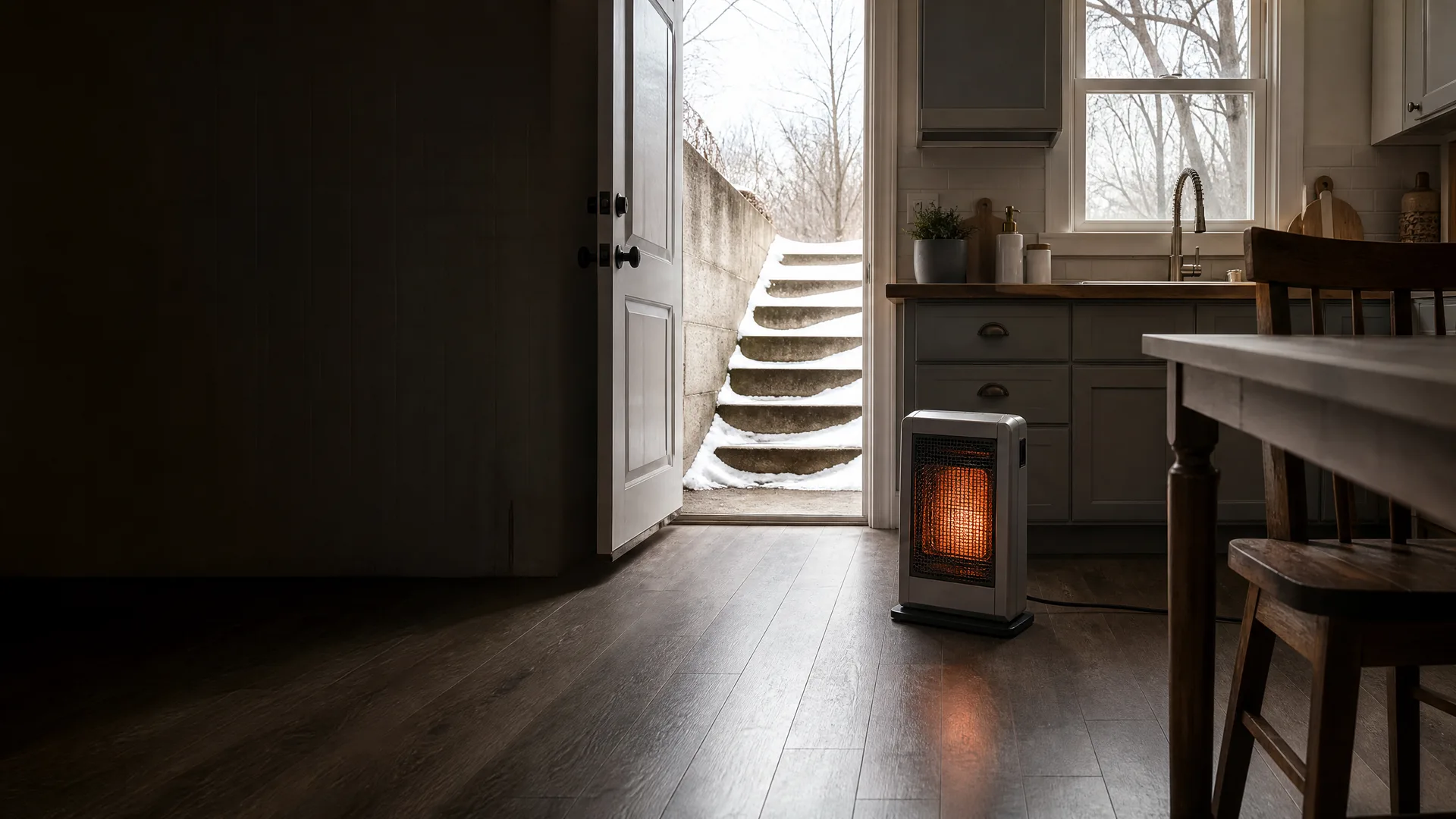
A portable electric space heater with glowing orange elements sits on a dark wood floor near an open exterior door that reveals snow-dusted concrete steps, with a kitchen counter, sink, window and wooden table to the right.

The space heater by the kitchen table has been running since five this morning, and it's the only warm spot in the house. Behind it, the basement door stands open, because that's where the furnace is and you've been down there twice already, flipping the switch, listening for the whoosh that isn't coming. Outside it's still dark, still January-cold, the kind of morning Oklahoma County gets a lot of this time of year. Your coffee's gone lukewarm sitting on the counter while you check the thermostat again. Fifty-eight degrees and dropping. The kids will be up soon, wanting breakfast, wanting the house to feel like a house. Right now it feels like a place you're waiting to leave.

How cold does it get, and how long does a furnace here have to work?

  • Winter nights average 30°F

    Nights this cold put a real load on an aging furnace, and a weak one runs longer to keep up, which is when parts give out.

  • Heat runs October through April

    Seven months of regular use is most of the year. A furnace near the end of its life doesn't get much rest before the next cold snap.

  • 58.5% of homes heat with gas

    Most homes here run on gas, so when a furnace is done, replacement usually means sizing and venting a new gas unit correctly, not switching fuels.

NOAA nClimDiv 1991-2020 · ACS 2020-2024

A furnace that's ten or twelve years old and still heating every room evenly is worth repairing when something breaks. Age alone isn't the problem if it's keeping up.

A furnace that's cycling more than it used to, or leaving some rooms colder than others, is losing ground even if it's not broken yet. That's the one worth replacing before it quits on a cold night.

A gray-haired bearded man in a dark knit sweater sits on a light gray sofa in a sunlit living room, looking to his left, with a framed artwork, a potted palm, and a curtained glass door behind him.
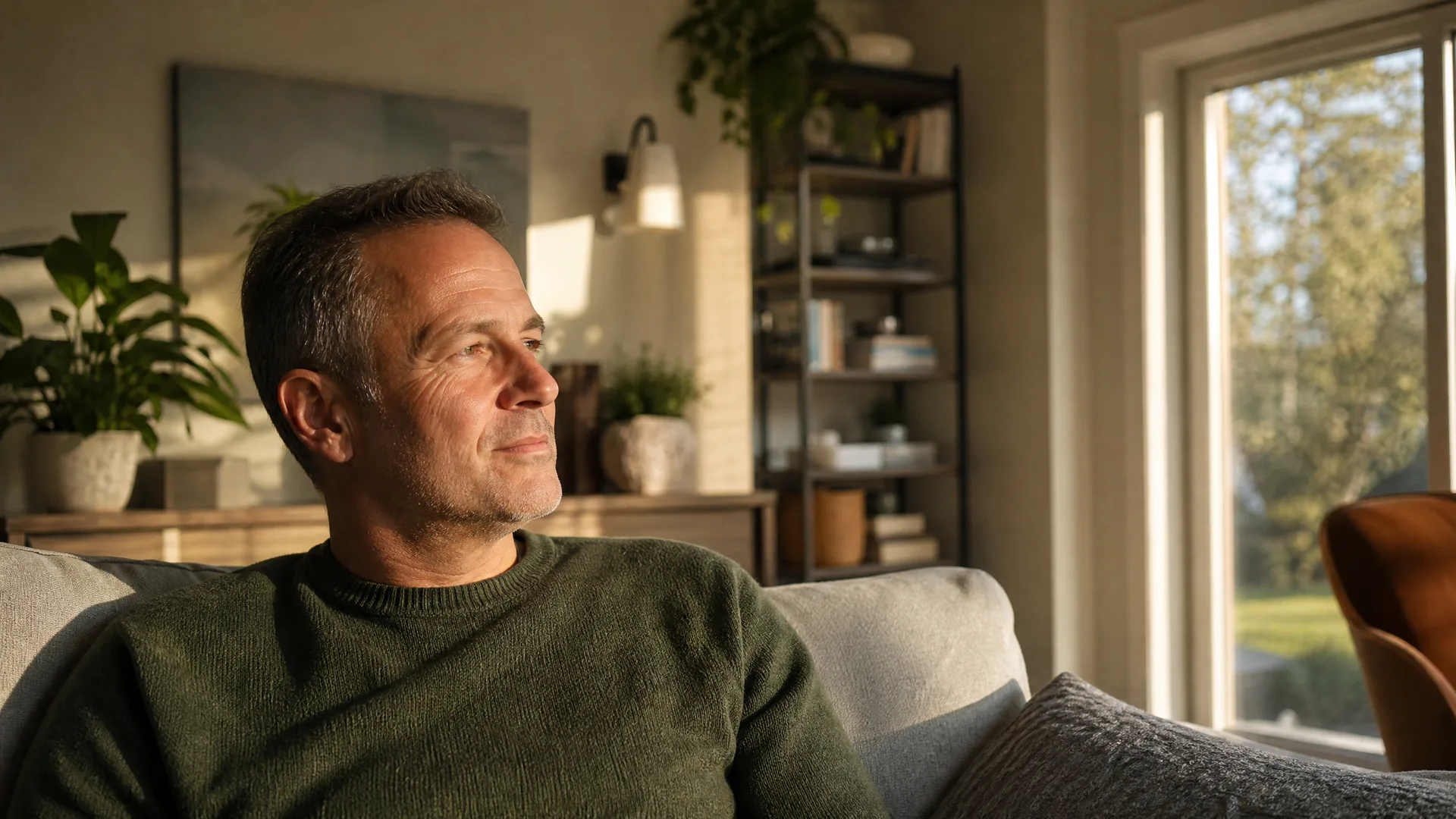
A middle-aged man in a dark green sweater sits on a light grey sofa looking toward a sunlit window, with a wooden shelving unit, lamp and potted plants in the background.
A man in a dark green sweater sits on a light grey sofa in a sunlit living room, looking to his left, with a shelving unit, houseplants, framed art and a large window behind him.
A gray-haired bearded man in a dark green sweater sits on a light gray sofa in a sunlit living room with a potted plant, framed picture, and dark shelving in the background.

How a furnace actually fires

  • A furnace lights by sparking an igniter, proving a flame sensor, then opening the gas valve, all in the right order.
  • If the flame sensor doesn't detect fire within a few seconds, the gas valve shuts automatically, a safety step, not a flaw in the unit.
  • The inducer motor runs first to clear the heat exchanger of old gas before each new cycle starts.
  • A cracked heat exchanger lets exhaust mix with the air your ducts push through the house, and that's a safety issue, not a repair you put off.
  • Furnaces here cycle on and off dozens of times a day each winter, and every cycle wears the same igniter and sensor a little more.
  • Once a heat exchanger or control board fails, parts for an older furnace often take longer to find, which stretches out a repair instead of fixing it fast.

A furnace doesn't just dump gas into a flame. It runs through a sequence, and every part of that sequence has to pass before the next one starts. The inducer motor kicks on first and clears any leftover gas from the heat exchanger. Then the igniter sparks, the flame sensor confirms there's actually fire, and only then does the gas valve stay open to keep burning. Skip a step, or have one part fail to report back, and the system shuts itself down rather than guess. That's not a malfunction. That's the furnace doing exactly what it's supposed to do when something isn't right.

The parts that wear are the ones working every cycle: the igniter, the flame sensor, the inducer motor. A furnace in Oklahoma County might cycle on and off dozens of times on a cold January day, and each cycle asks those same parts to do their job again. Over years, that adds up. The heat exchanger is the one part you really don't want to see fail. Once it cracks, exhaust can mix with the air your ducts are pushing through the house, and that's not something to patch and watch. It gets replaced, or the furnace does.

The older the furnace, the harder it can be to find the exact igniter or control board it needs, and a repair that should take one visit stretches into a search for a part.

Winter nights average 30°F

A 30°F night means the furnace runs for hours straight to hold the house at temperature, not in short bursts. An older unit spends more of that time working harder than it was built for, which is where cracked heat exchangers and worn blower motors tend to show up first.

NOAA nClimDiv 1991-2020

Repair gets you through this winter

A cracked heat exchanger aside, most furnace repairs are worth doing. A new igniter, a new flame sensor, a new blower motor, these are normal fixes on a furnace that's otherwise sound, and they cost a fraction of a new system. If your furnace is under ten years old, or it's older but has only needed minor work, repair is the right call. You keep the heat running through January without a big outlay, and you buy time to plan a replacement on your schedule instead of in the middle of a cold snap.


Replacement stops the repeat calls

If you've had a repair tech out twice this winter already, or the furnace is pushing fifteen years and the parts that fail are getting harder to find, repair starts costing you more than it saves. A furnace that can't hold the house at temperature on a cold night, or heats some rooms and not others, is telling you it's done. Replacing it means a furnace sized right for your house, running the way it should from day one. A licensed installer local to Oklahoma City can size the new unit to your home and have it in before the next hard freeze.

A middle-aged woman with shoulder-length dark hair, wearing a gray cardigan over a cream top, sits in an upholstered armchair and looks toward a sunlit window, with a shelf holding framed pictures and a plant behind her.
A woman with her hair in a bun sits wrapped in a beige knitted blanket on a couch, holding a sleeping child against her chest in a warmly lit room with a lamp and houseplant in the background.
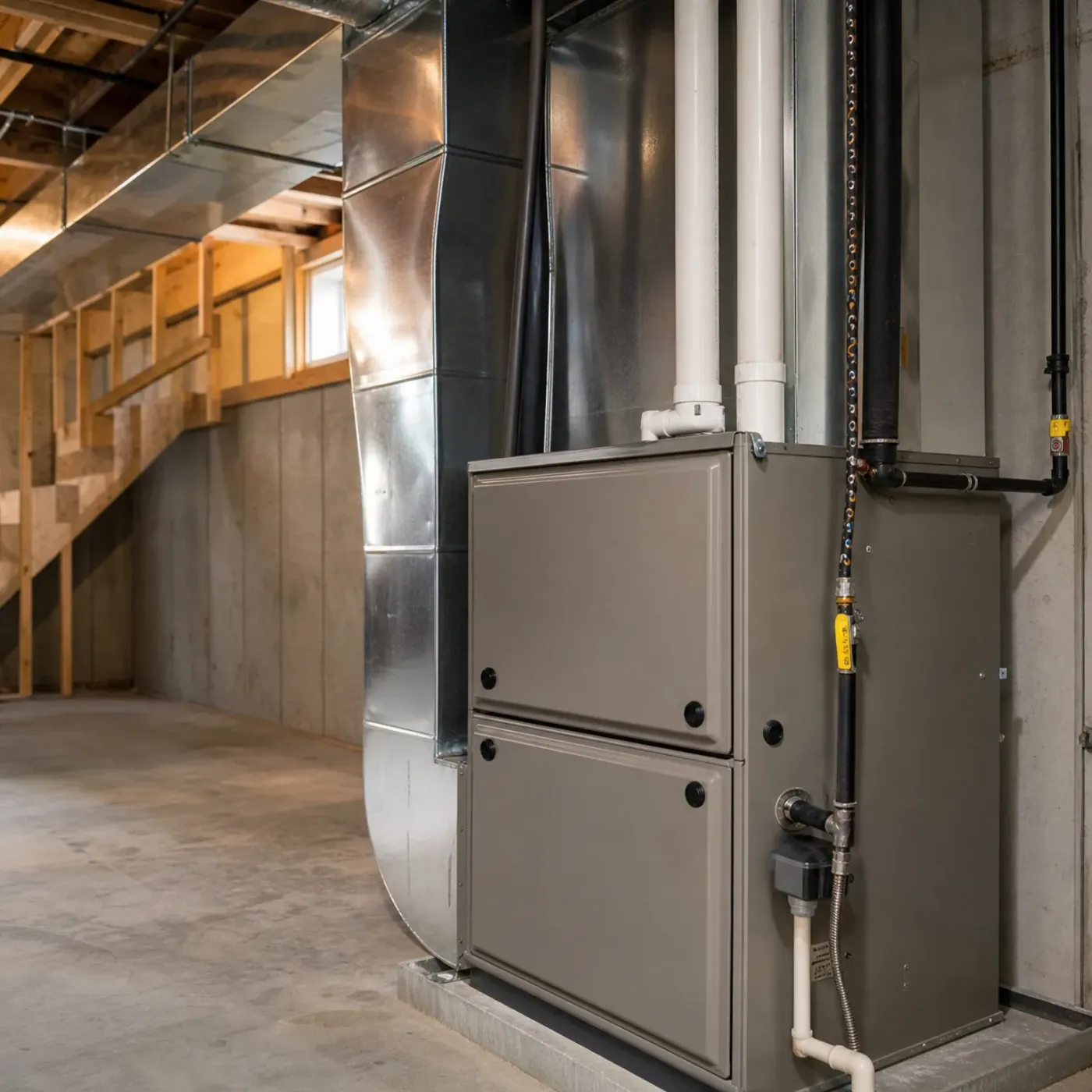
A gray high-efficiency furnace in an unfinished basement, connected to large galvanized sheet-metal ductwork, PVC vent pipes, a gas line and flexible conduit, with concrete walls, wood framing and a staircase in the background.

Stop chasing a furnace pro

A licensed pro who works in Oklahoma County gets your request.

Send the form and the search for an installer is over.

Get a licensed local pro

No charge to send it. You decide if you hire them.

What are you noticing around the house right now?

You've probably got a room or two that never quite warms up, even with the thermostat set the same as always. Maybe the furnace runs longer than it used to, or kicks on and off more often. You might catch a burning smell when it first fires, or hear a rattle or a bang from the vents that wasn't there last winter. Some mornings the house feels cold before the furnace finally catches. None of that is normal wear you should just live with. A furnace straining to keep up can crack a heat exchanger over time, and that's a safety issue, not just a comfort one, so it's worth paying attention to rather than waiting it out.

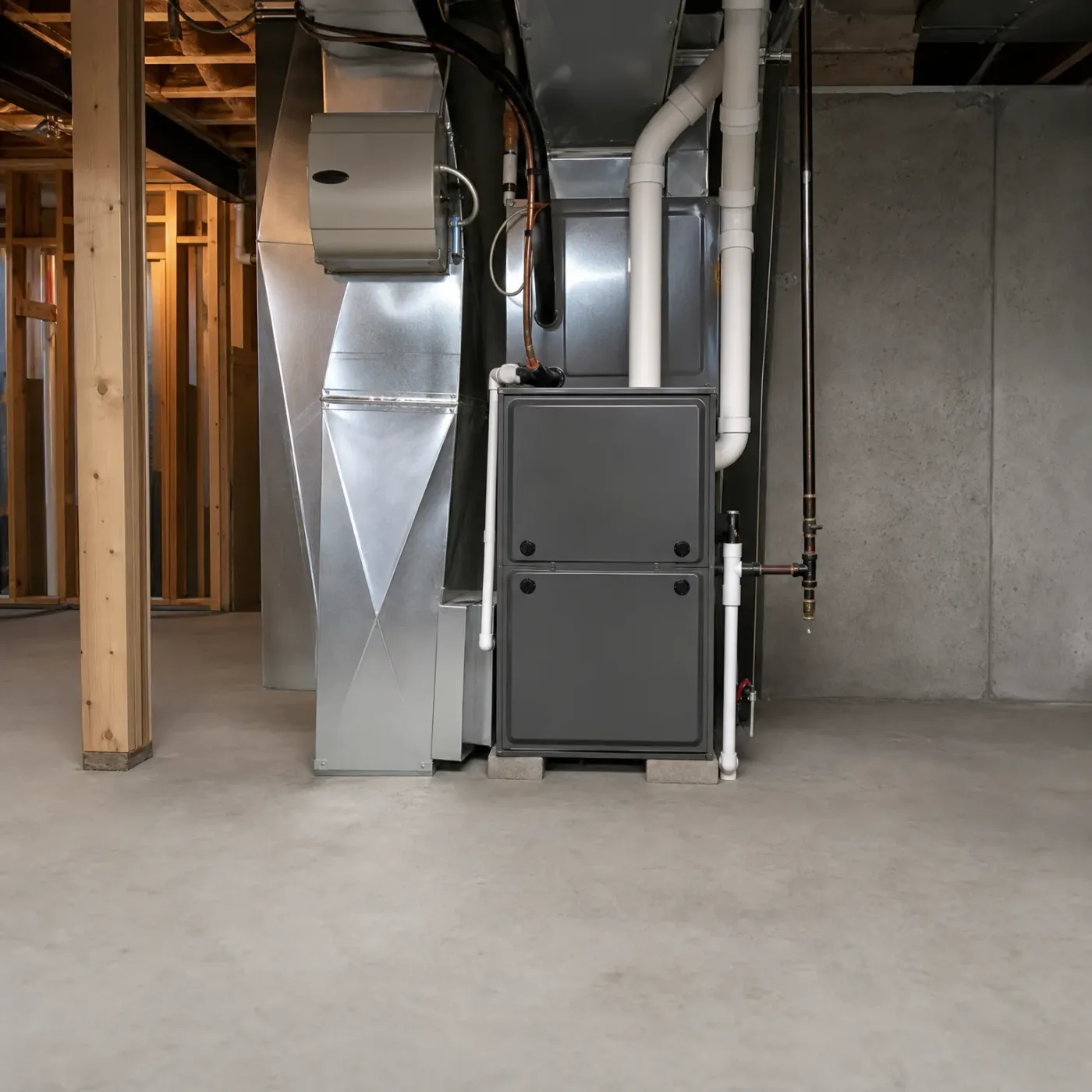
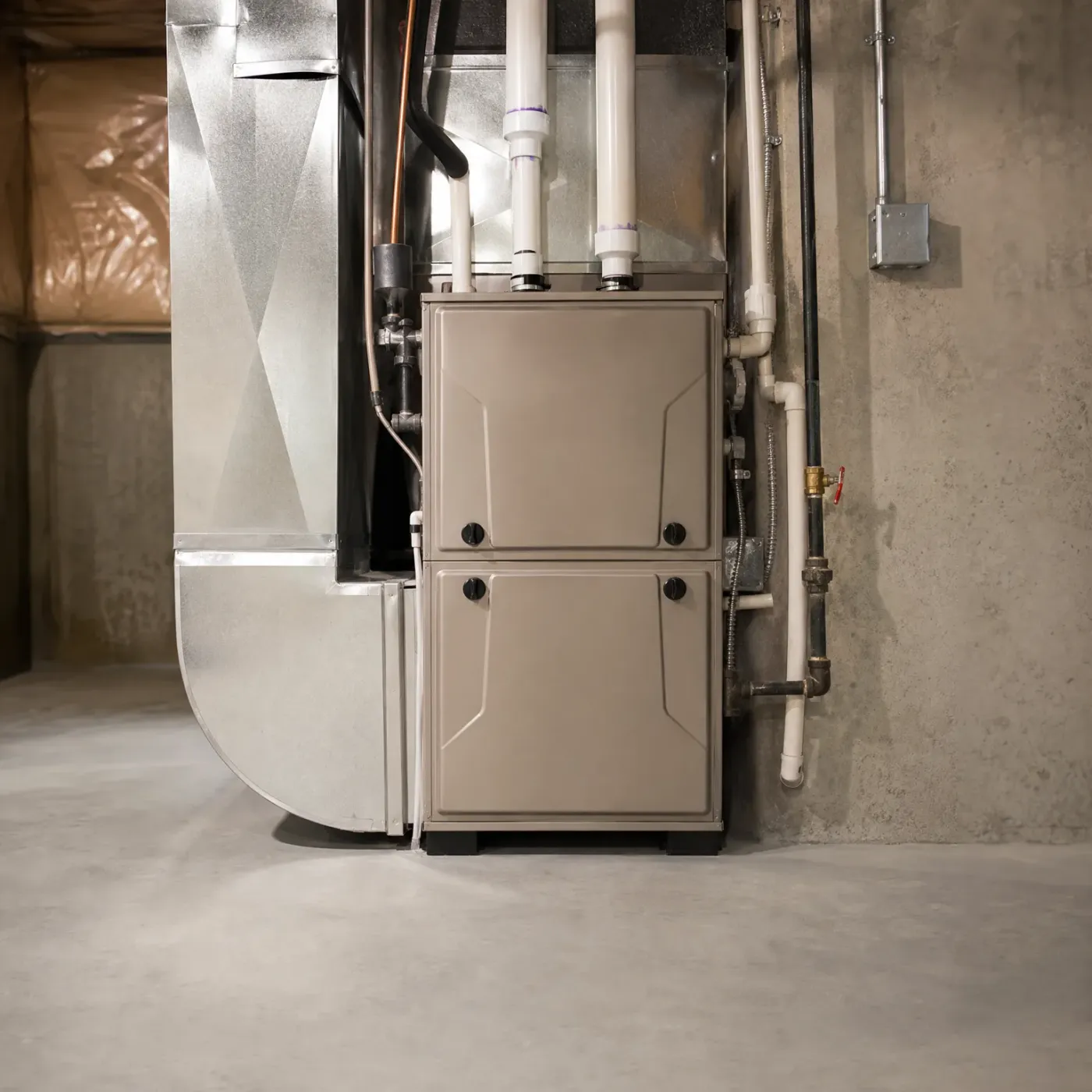
A gray high-efficiency furnace with white PVC venting pipes stands on blocks in a basement next to sheet-metal ductwork, with exposed wood framing on the left and a concrete wall and floor.

Furnace running as it should

This is a furnace doing its job. The cabinet is sealed, the flue and condensate pipes run clean to the outside, and the gas line feeding it is solid copper with no patches or splices. Nothing here is working harder than it has to, even on the coldest nights.

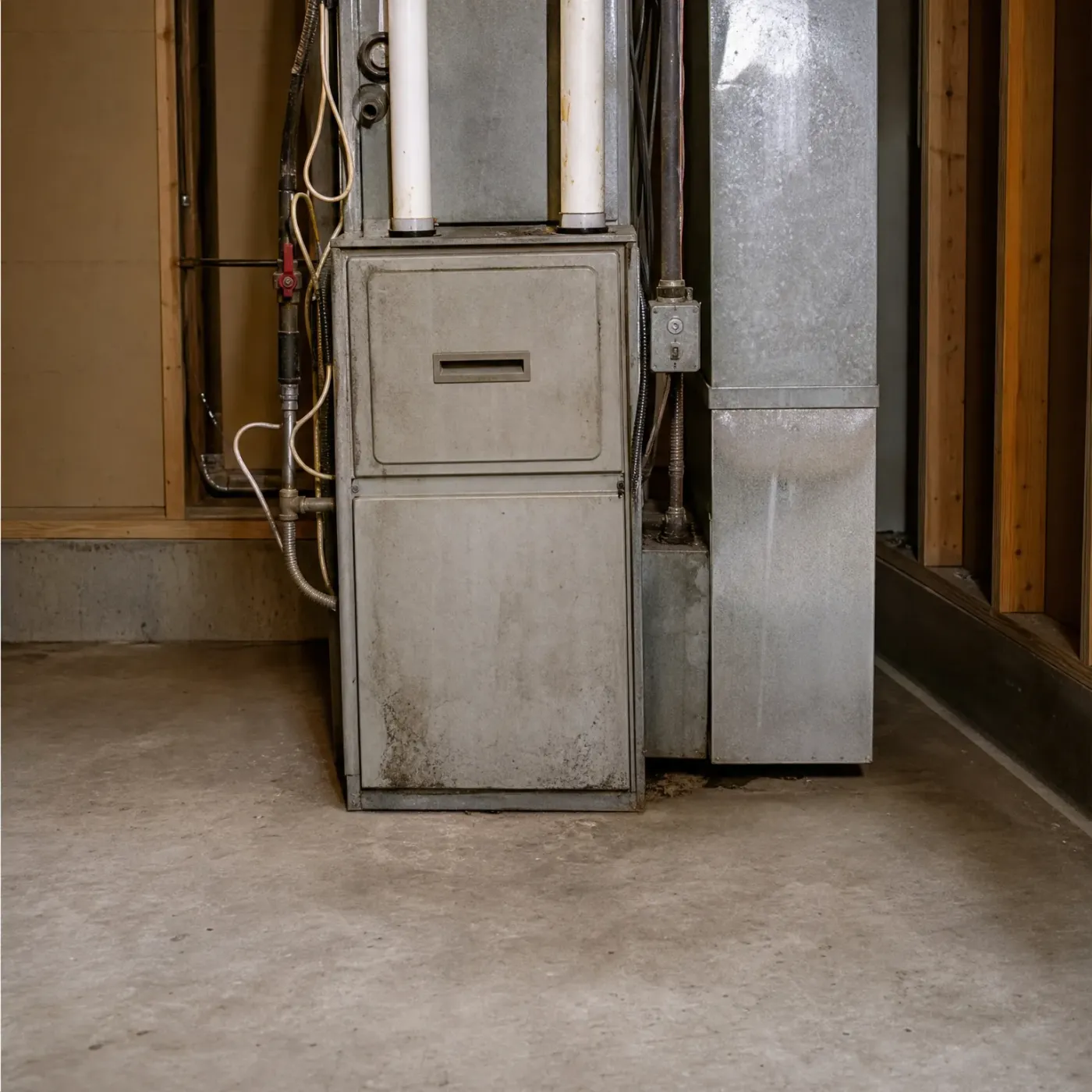
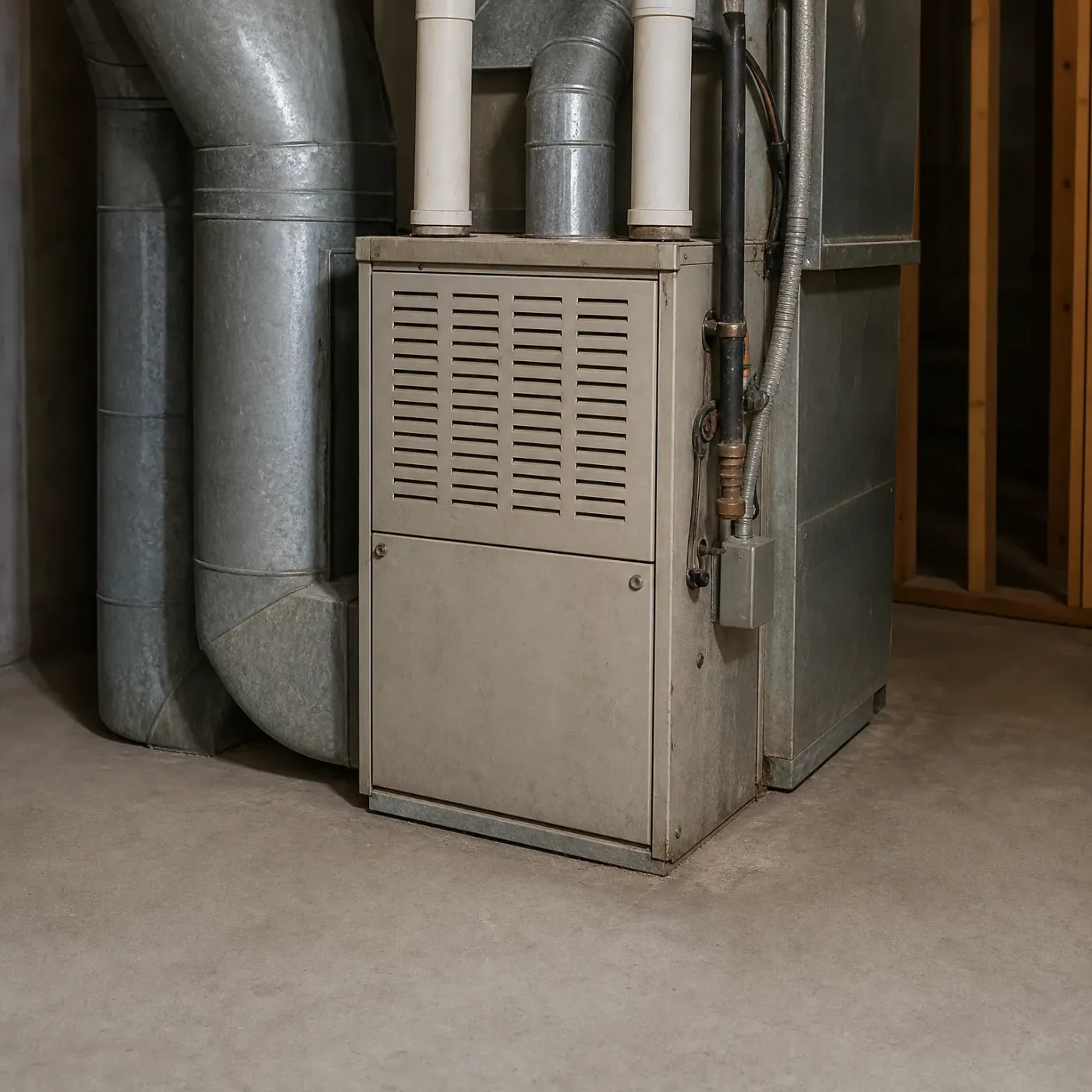
An older gas furnace with two white PVC vent pipes stands on a concrete basement floor beside galvanized sheet-metal ductwork, flexible conduit, and piping along a wall.

Furnace showing its age

The metal cabinet is scaled and dented, and the flexible gas line is the kind installers don't use anymore. A furnace built like this one has already outlasted what most of its parts were made for, and the basement around it is carrying signs of wear that match its own.

Old Furnace or One Bad Part

Old furnace, new furnace

  • A furnace that's fifteen or twenty years old has already outlasted most of its parts, so one repair just buys time before the next one.
  • Newer furnaces hold a tighter temperature across the house, so the cold room by the garage finally gets the same heat as the rest.
  • Gas is cheap here, but an old furnace still burns more of it to put out the same heat as a new one.
  • Replacement resets the clock on everything at once, the heat exchanger, the blower motor, the igniter, instead of one part at a time.
  • A new furnace comes with a warranty that actually means something, since nothing on it has fifteen winters on it already.

Newer furnace, one bad part

  • A furnace under ten years old with a cracked igniter or a failed flame sensor is a normal repair, not a sign the unit is done.
  • Replacing one part on a furnace that's otherwise sound costs far less than replacing the whole system.
  • If every room still heats evenly and the furnace cycles the way it always has, the rest of the unit is doing its job.
  • A single failed part doesn't mean the heat exchanger or blower motor are wearing out too.
  • Fixing what broke keeps you through this winter without touching a furnace that has years left in it.
  1. Thermostat calls for heat and signals the control board

  2. Inducer motor starts and clears the exchanger of leftover gas

  3. Igniter heats up or sparks to light the burners

  4. Flame sensor confirms fire and keeps the gas valve open

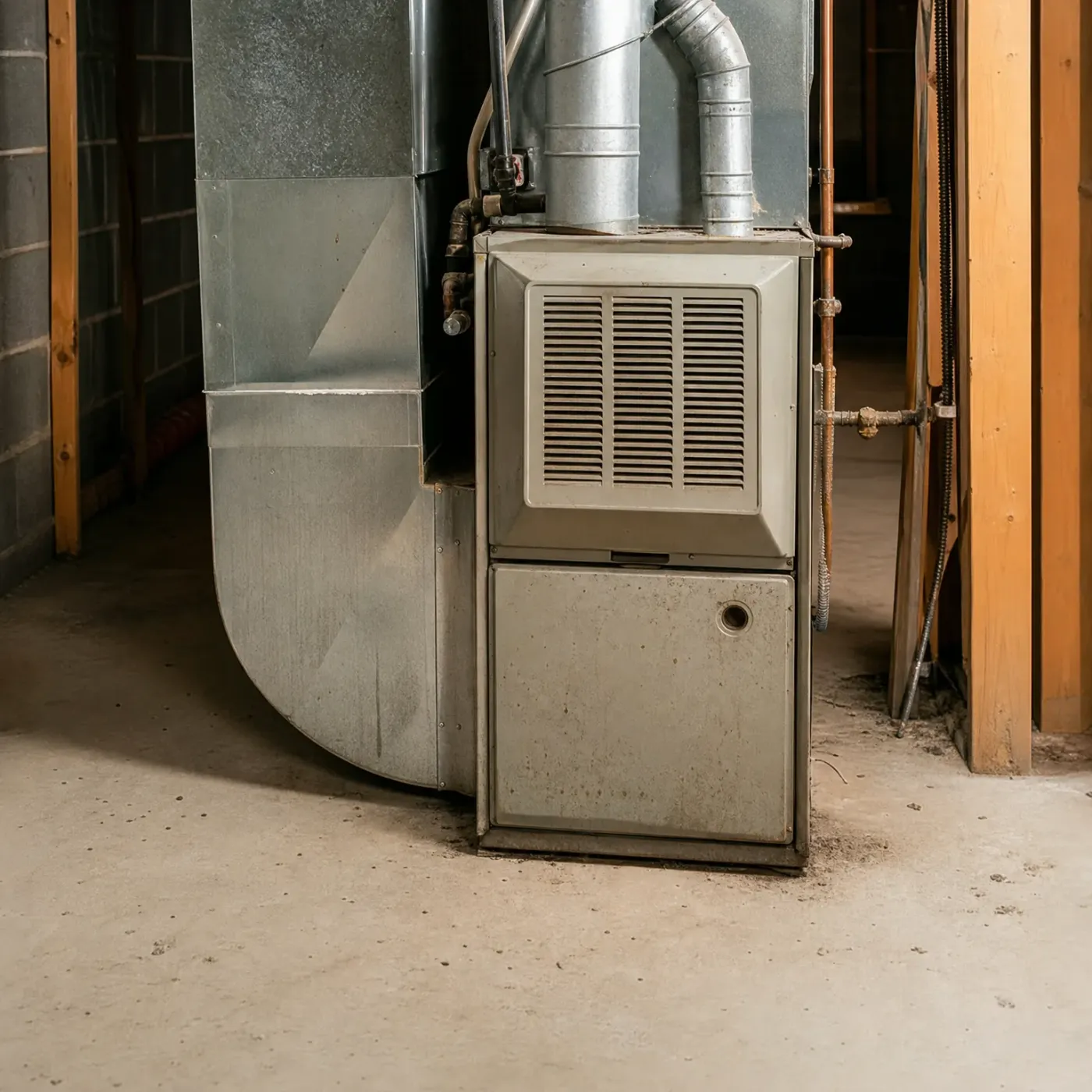
An older gas furnace with a louvered front panel stands on a concrete basement floor beside large sheet-metal ductwork, a metal flue pipe, copper piping and wood framing.
Before you get your furnace installation
A beige high-efficiency furnace stands on a concrete basement floor beside sheet-metal ductwork, with white PVC vent pipes, flexible conduit and copper and steel piping running up a concrete wall to an electrical box.
After you get your furnace installation
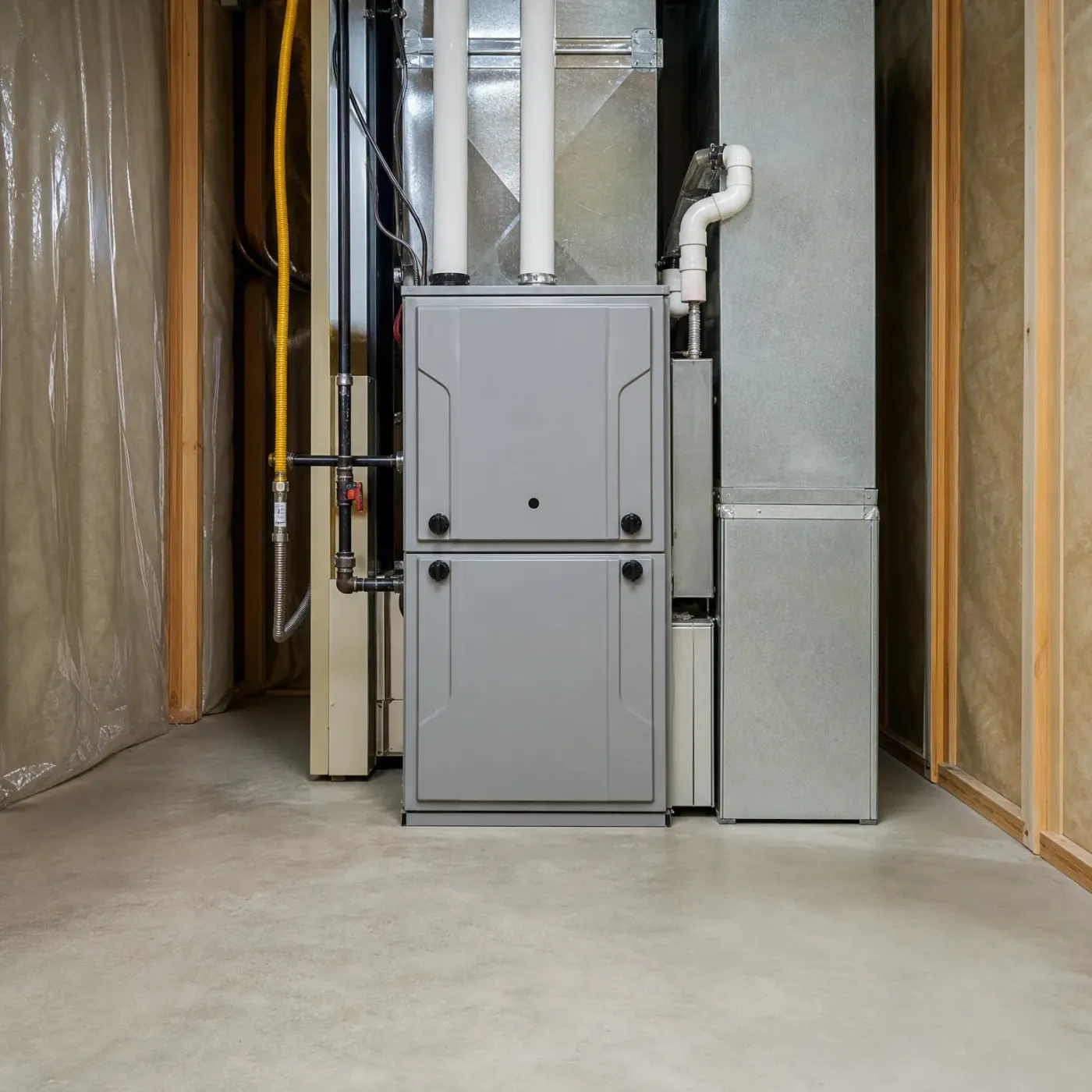
A gray high-efficiency furnace with white PVC vent pipes stands in an unfinished basement beside sheet-metal ductwork, gas piping, and insulated stud walls on a concrete floor.

What a sound setup looks like

PVC drain pipe, a yellow flexible gas line, solid black gas pipe, and the filter cabinet all sit clean and connected on the concrete floor. Nothing is patched or jury-rigged. A furnace installed this way is built to run as many winters as it's given.

A beige sheet-metal furnace with a louvered upper panel stands on a concrete basement floor, connected to galvanized ductwork, white PVC vent pipes, and a metal gas line with an electrical box.

What age looks like underneath

Galvanized ductwork, copper gas line, a louvered front panel, this is an older mid-efficiency furnace. None of that means it's failing tonight, but these parts have been doing their job for a long time, and a gas line or duct joint this old is worth a look before another winter asks more of it.

A furnace that heats every room and only needs the occasional part is worth keeping going. One that's pushing fifteen or twenty years, or leaving you with a cold room and a higher gas bill every winter, is telling you it's done. Oklahoma City winters don't give a tired furnace much room to rest, and a cracked heat exchanger or a blower motor that's worn past its limit isn't something to wait out. Finding someone qualified to look at it shouldn't be the hard part. The contractor matched to your request is local, licensed, and works on furnaces like yours all winter, so they already know what tends to fail in a house like yours and what a sound installation looks like. You'll hear from one contractor, not a handful of them competing for the job. That's one less thing to sort out while you're standing by a space heater deciding what to do next.

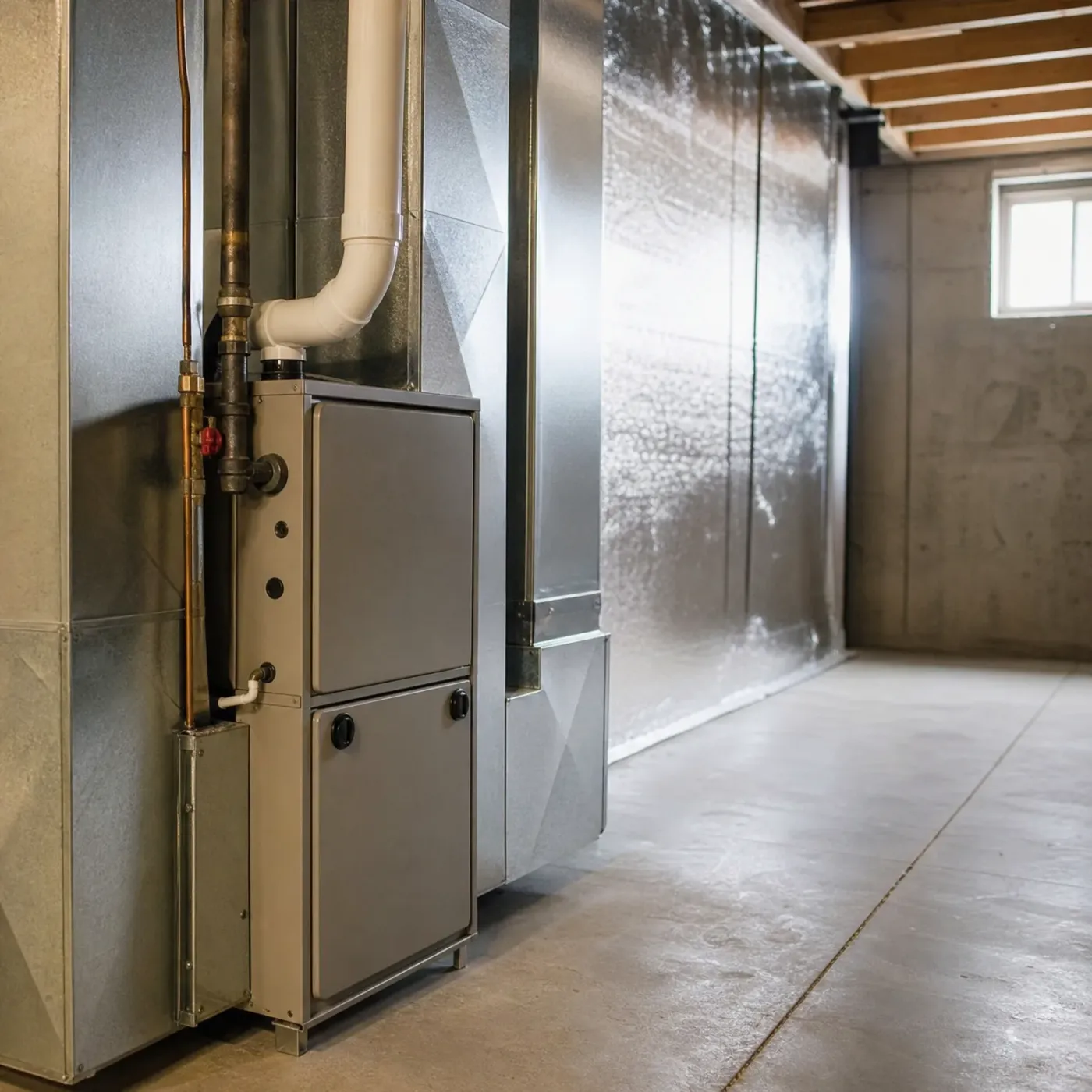
A gray furnace with a white PVC vent pipe and copper piping stands beside large galvanized sheet-metal ducts in an unfinished basement with concrete floor, concrete walls, foil-faced insulation, and a small window.

Send one request and you're done looking

Let a pro reach out

A licensed installer who works in Oklahoma County gets your project.

There's no charge for the request.