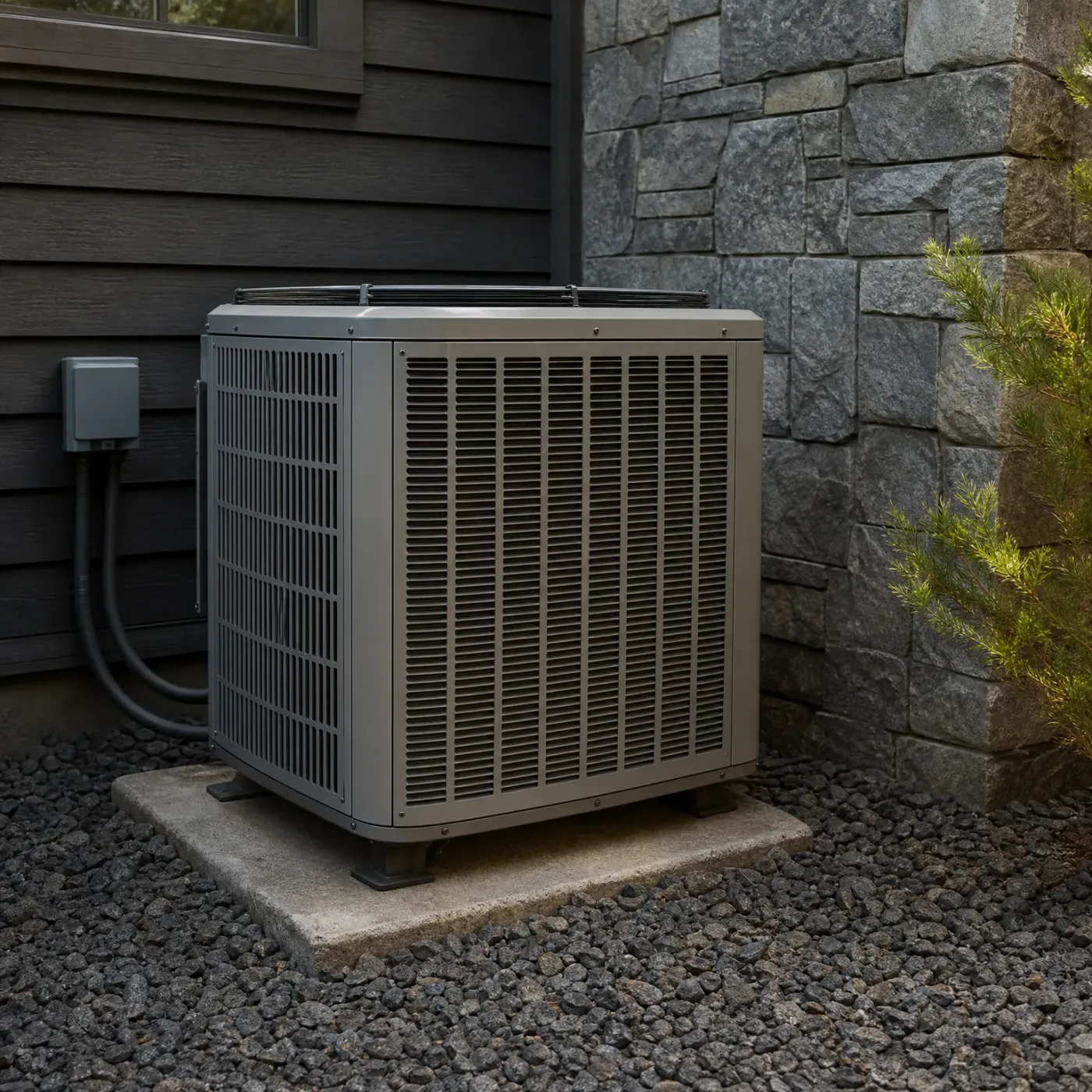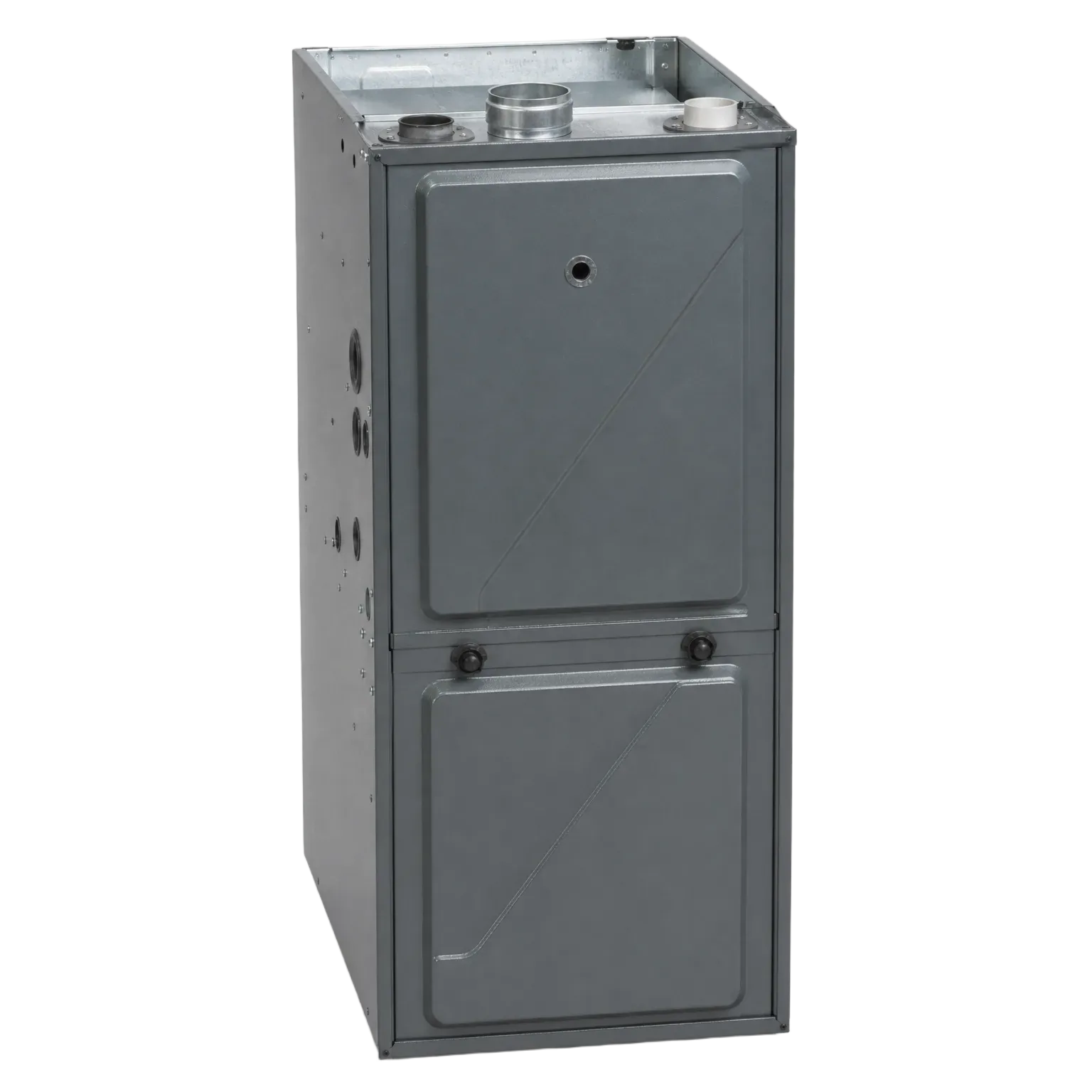

A furnace lighting the way it should
The burners catch the moment gas reaches them. No delay, no thump through the ducts. Flex gas line, flue pipe and ductwork all sealed tight, which is part of why it stays quiet.
Skip searching for a furnace pro and answer a few questions instead.
Start one formA bang when your furnace starts is usually trapped gas igniting all at once instead of lighting smoothly. Gas builds up in the burner chamber for a second or two longer than it should, then catches with a thump you can feel in the ductwork. Dirty burners are the most common cause. A cracked heat exchanger can cause the same noise and is worth ruling out, since that's a safety issue rather than a nuisance. A bang when the furnace shuts off points somewhere else, usually ductwork flexing as it cools. Gas furnaces run hard through an Oklahoma winter, and burners that don't get cleaned collect dust and rust over a few seasons, which is when this noise tends to start showing up. It's not something to wait out. A furnace that's banging on startup needs a look from someone who can get into the burner assembly and check the exchanger, not just a filter swap.
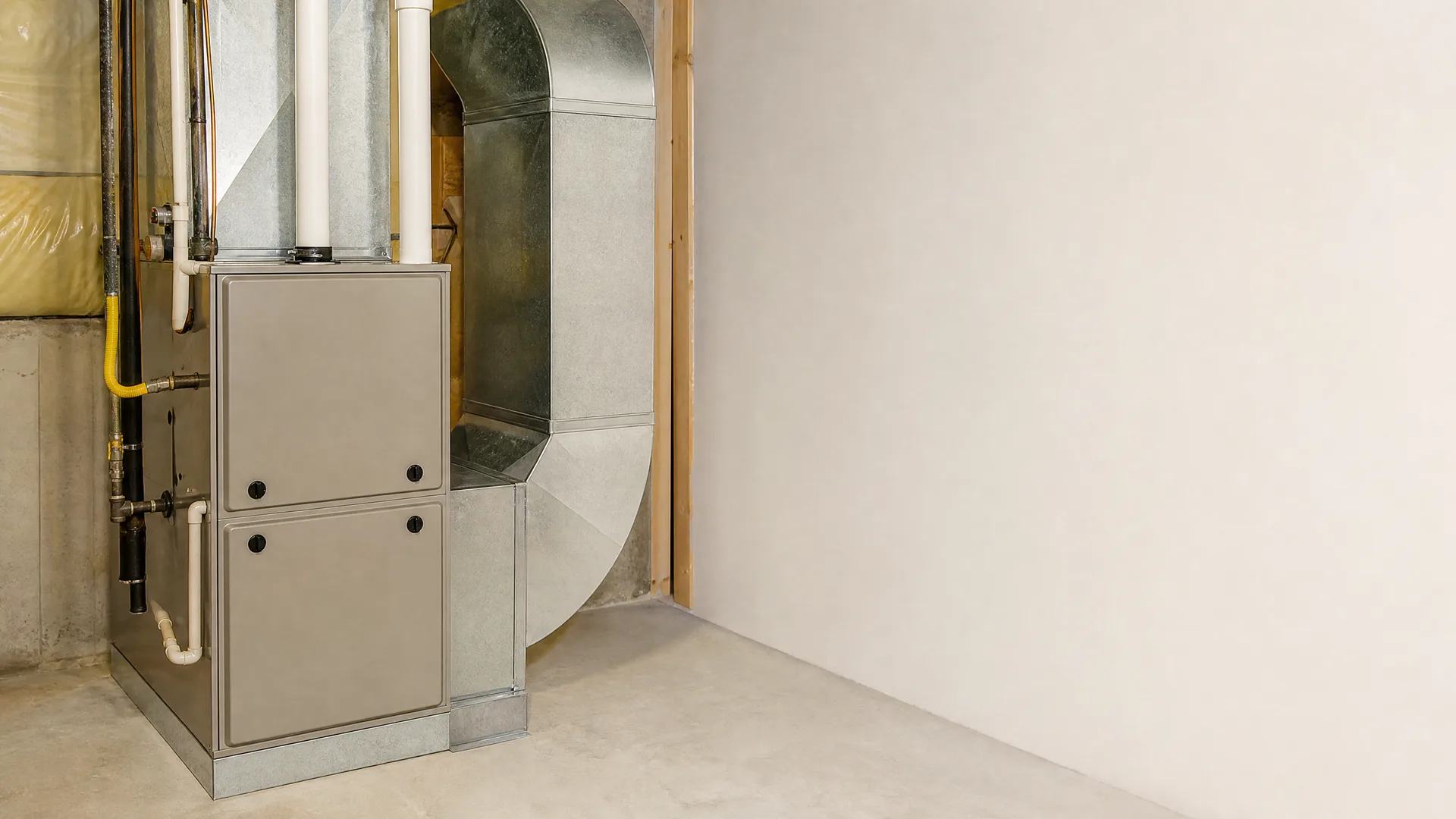
Every time the burners light late, that small blast hits the heat exchanger before the system settles into a normal flame. One bang won't hurt anything. A furnace that's done it for a few winters running has usually got the heat exchanger taking that hit over and over, along with the igniter and the burner assembly around it. Cleaning the burners usually stops the noise before it gets to that point.
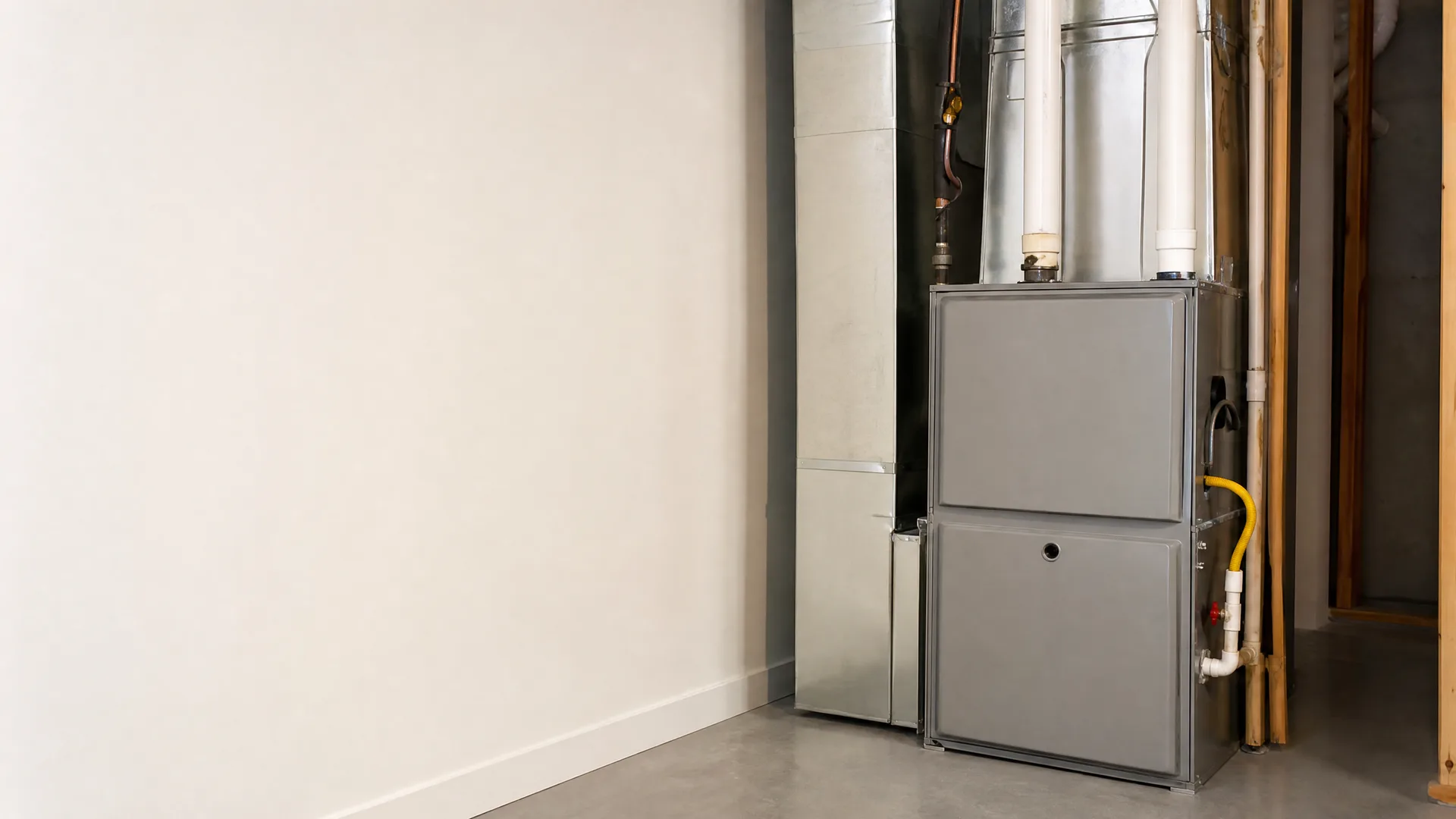
A furnace that only bangs on the first cold morning of the year, then runs quiet the rest of January, is usually just dealing with dust that burned off a dirty burner. One that bangs every time it kicks on, whether it's 40 degrees or 15, points to something mechanical, like a cracked igniter or a burner that's gapped wrong. Either way, it's worth having someone look before a hard freeze finds the furnace running nonstop.
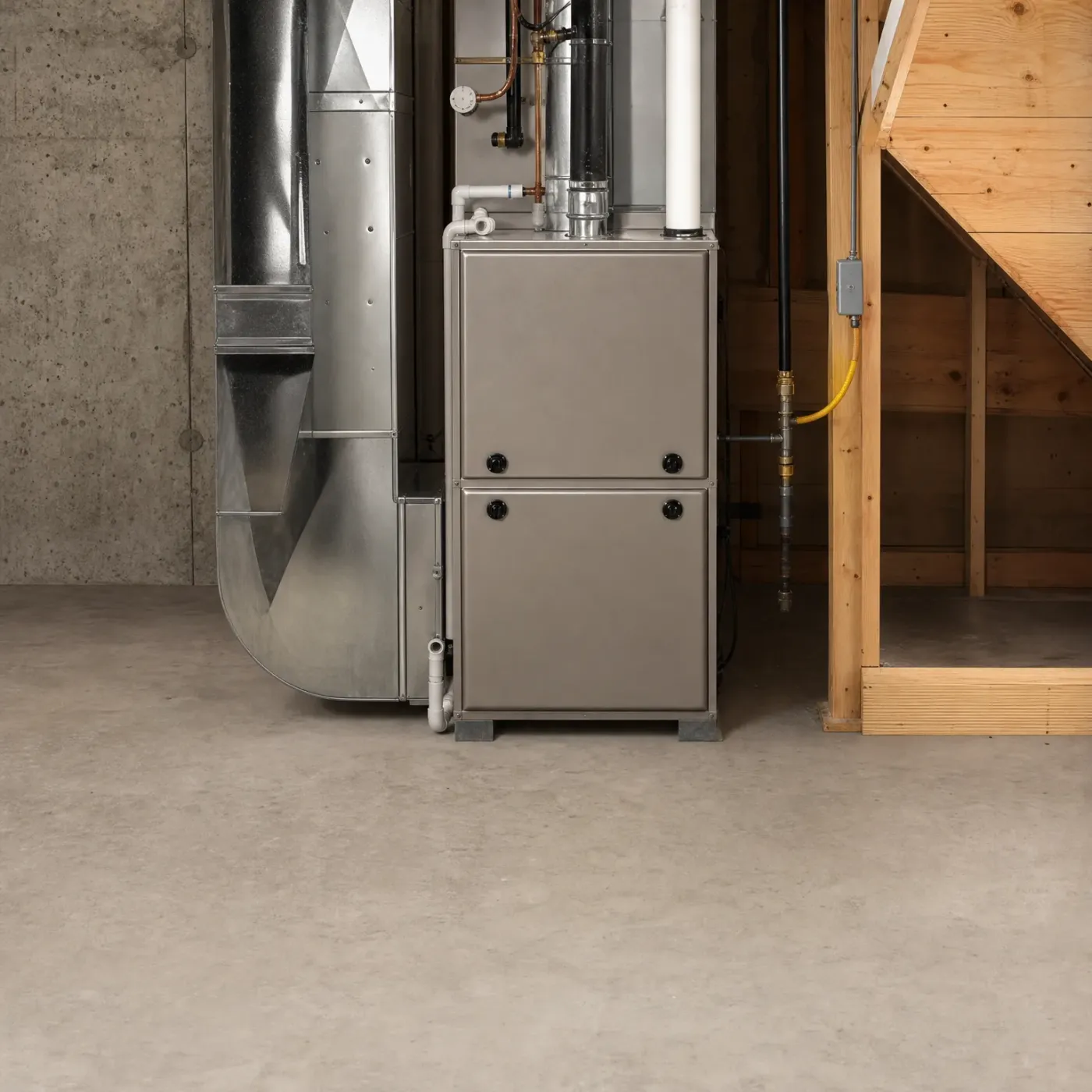
The burners catch the moment gas reaches them. No delay, no thump through the ducts. Flex gas line, flue pipe and ductwork all sealed tight, which is part of why it stays quiet.
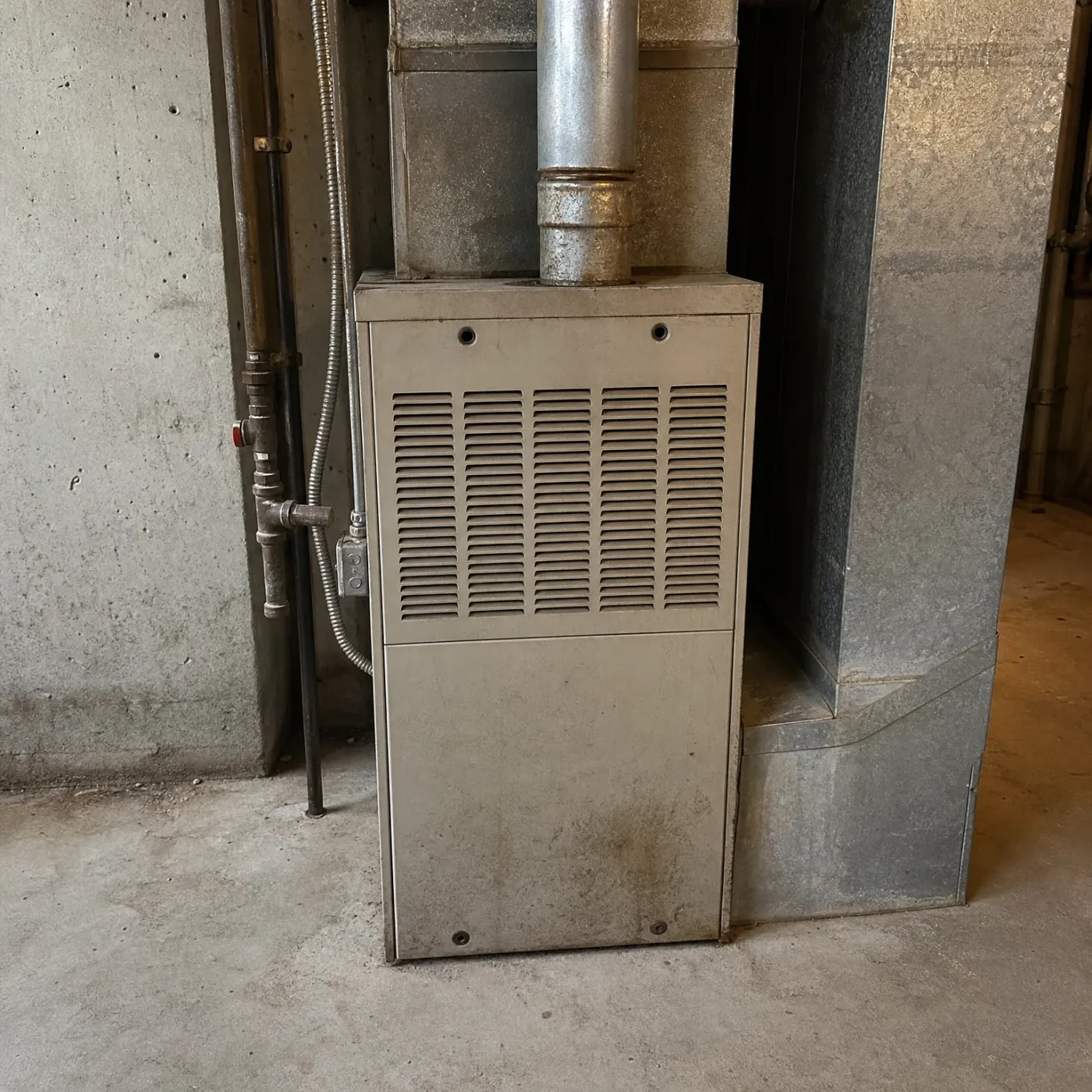
Galvanized ductwork overhead, gas pipes right where they should be, nothing out of place to the eye. The bang is happening inside, where dirty burners or a cracked heat exchanger don't show from the outside.
You probably hear it most on the coldest mornings, when the furnace has been off for hours and kicks on hard. The bang comes once, right at startup, maybe loud enough to rattle a vent cover or make someone upstairs ask what that was. Some winters it's one soft thump. Other winters, especially once the burners get dirtier, it's sharper and happens almost every time the furnace cycles. You might also notice the flame looks uneven through the viewing window, or the burner compartment smells faintly of gas for a second before it lights. Left alone through enough Oklahoma winters, that repeated jolt is hard on the heat exchanger, and a cracked one is a safety problem, not just a noisy one.




Only one pro gets your request, so you hear from one company.
You only hire the pro if you want to.
Shutting off the gas, pulling the burner assembly and brushing off the rust and dust is work a lot of homeowners can manage with the furnace manual in hand. It sometimes quiets a bang for a while, especially if the buildup was light. What it won't tell you is whether the flame sensor is worn, whether the gas pressure is set right, or whether the heat exchanger has already taken damage from a winter or two of delayed ignition. You're guessing at the cause instead of finding it, and you're working on a gas appliance without the training to know what else to check while it's open.
A licensed furnace contractor in Oklahoma who works on these units every winter knows the handful of things that usually cause this: dirty burners, a weak flame sensor, gas pressure that's drifted off. They'll check the heat exchanger too, which isn't something to skip given what delayed ignition does to it over time. Instead of searching around, calling a few companies and explaining the bang to each one, you get matched with one local contractor who comes out, finds the actual cause, and fixes it rather than just quieting it for a season.
Nights here average 30°F across December, January and February, so your furnace is firing up cold most mornings all winter. Every one of those startups is a chance for gas to build up before it catches. That's when you hear the bang.
NOAA nClimDiv 1991-2020 county normals weighted by homes
The bang is delayed ignition. Gas gathers in the burner chamber a beat longer than it should, then lights all at once instead of catching smoothly. Dirty burners are the usual cause. A worn igniter or a weak flame sensor can cause the same thing. None of that clears up by waiting. Oklahoma mornings stay cold enough all winter that the furnace keeps firing up into that same gap, and each startup puts the same small jolt through the heat exchanger. Brushing off the burners can quiet it for a stretch, especially if rust and dust were most of the problem. It won't do anything for a cracked igniter or a flame sensor that's wearing out, and those keep failing on their own schedule whether the burners are clean or not.
This is a repair job, and it's worth getting someone who already knows what's usually behind this exact noise. A furnace technician working winters in Oklahoma has heard this bang plenty of times and knows which part is the likely cause before they pull the panel off. Sending a request here means one licensed, local contractor looks at your furnace. Not three companies calling back to back, not explaining the noise over and over to whoever picks up. One contractor, one visit, one answer on what's actually wrong. That's the part this page takes off your plate. The furnace still needs a real diagnosis and a real repair. What you don't need to do is go find who's qualified to make it.
Skip calling around