Why your furnace smells like burning in Oklahoma

Step 1 of 3: Equipment

Why does my furnace smell like it's burning?

You turn the furnace on for the first time this winter and catch a burning smell coming from the vents. It's enough to make you want to shut the whole thing off until someone can look at it, especially with people at home who need the heat to just work.

That smell is usually dust burning off, unless it keeps up

The dust that settled on the heat exchanger and burners over the summer burns off in the first few minutes the furnace runs, and that's where the smell comes from. It should fade once the furnace has run for ten or fifteen minutes. If it doesn't fade, or it comes back every time the furnace cycles on, something inside is burning that shouldn't be: a worn-out blower motor, a cracked heat exchanger, or wiring that's overheating. A smell that sticks around or smells sharp rather than dusty is worth having a contractor look at, especially before you're relying on the furnace through a cold snap.

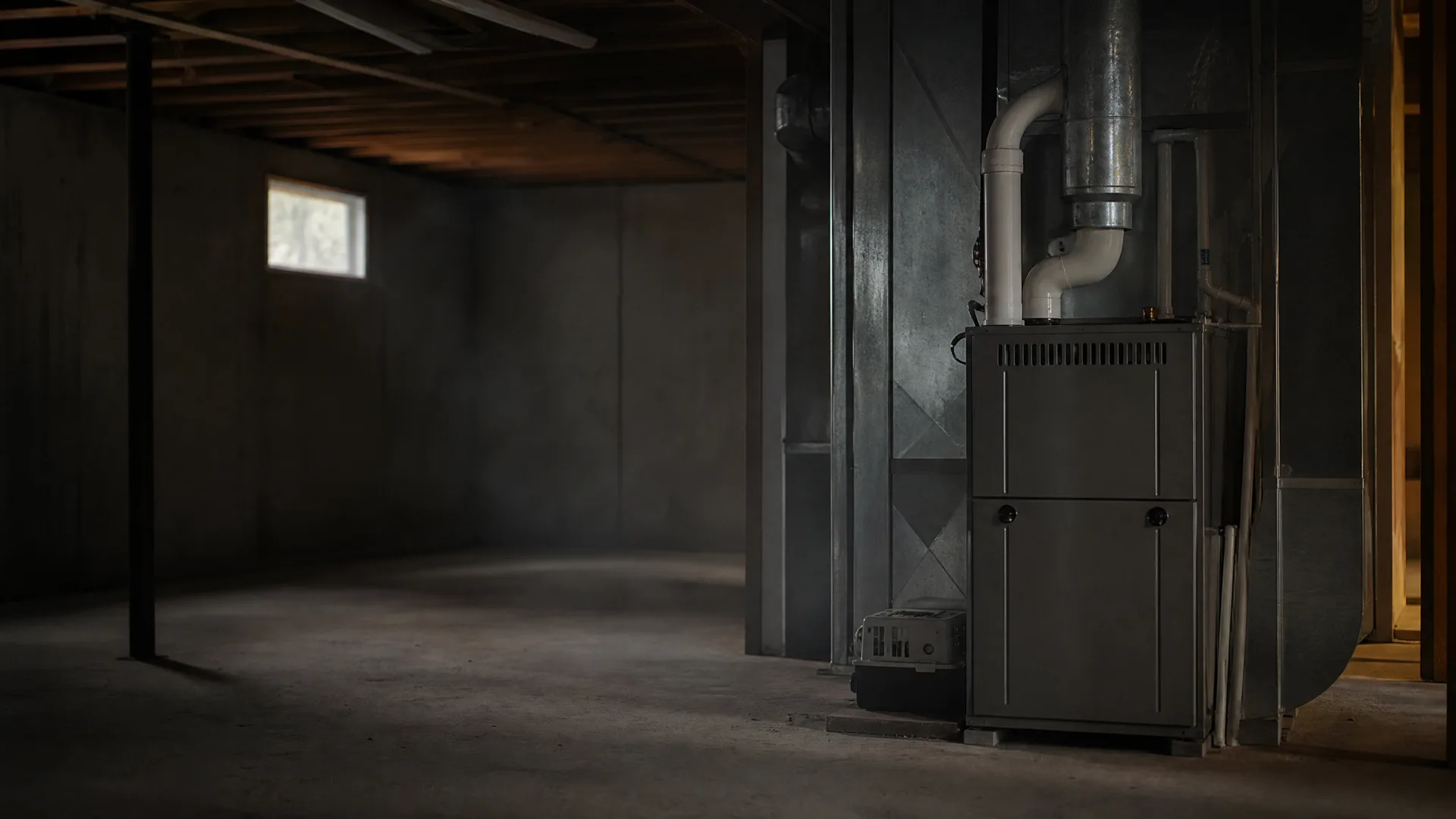
A dim unfinished basement with concrete walls, exposed floor joists, a small window, and a furnace connected to metal ductwork and PVC venting.

You're down in the basement checking on the furnace before the kids go to bed. It's November, already dark out, and the first real cold snap of the year is settling over Oklahoma. The furnace sits there dark and quiet, not running, and you can still smell it in the air. A thin haze of dust hangs near the cabinet where the burners kick on. You crouch down and look at the access panel, trying to decide if it's safe to leave it be tonight or if you need to kill the power to it now and figure out the rest in the morning.

Is this smell normal or a sign of trouble

A light dusty smell for the first hour, then nothing, is just the burner clearing off what settled on it since spring. Smell that comes back every time the furnace cycles, or gets stronger instead of weaker, is different. So is anything sharp or sour, or a smell closer to hot metal or scorched plastic. Those point to dust burning somewhere past the burner, like inside the blower motor, or a part running hotter than it should. Leave it alone and you risk the furnace shutting itself down on a cold night, or in rare cases, the air in your house carrying something you don't want your kids breathing. If the smell lasts past that first hour, it's worth a look.

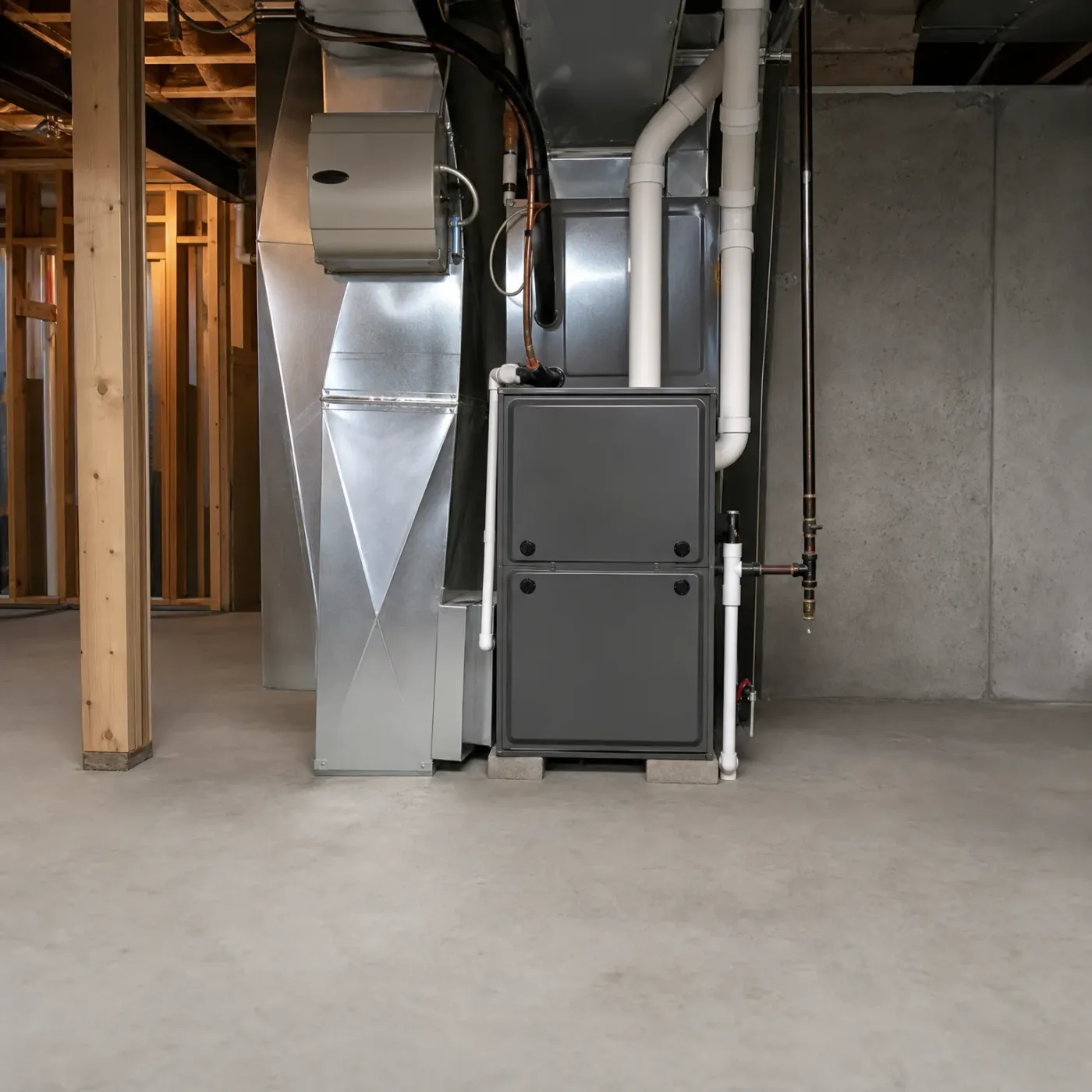
A gray high-efficiency furnace with white PVC venting pipes stands on blocks in a basement next to sheet-metal ductwork, with exposed wood framing on the left and a concrete wall and floor.

Dust burning off

The furnace fires up and the air coming through the vents carries that first-fire smell, faint and a little sharp. Run it an hour and it's gone. The burner and the metal around it just needed to shed what settled on them since last April. Nothing to do but let it finish.
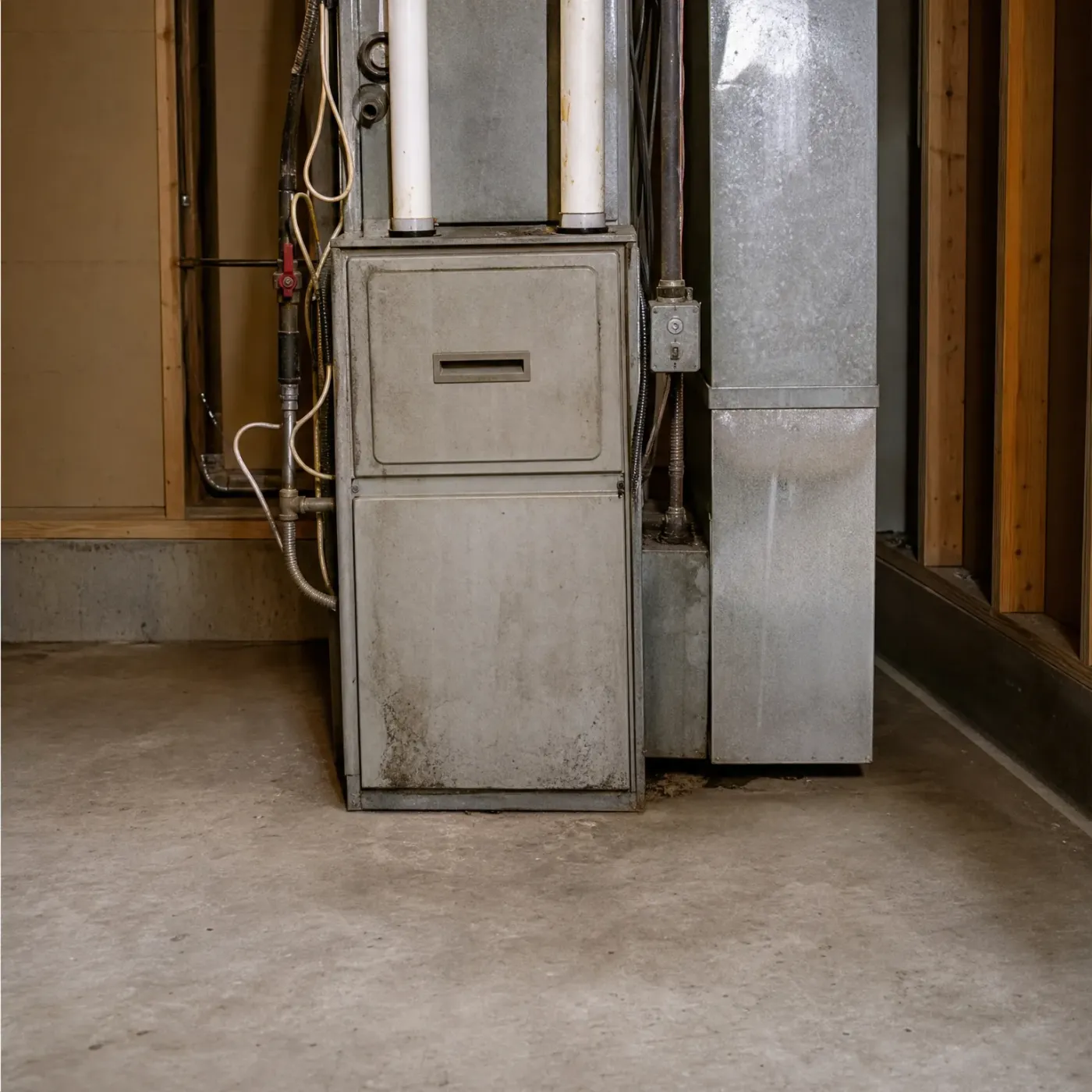

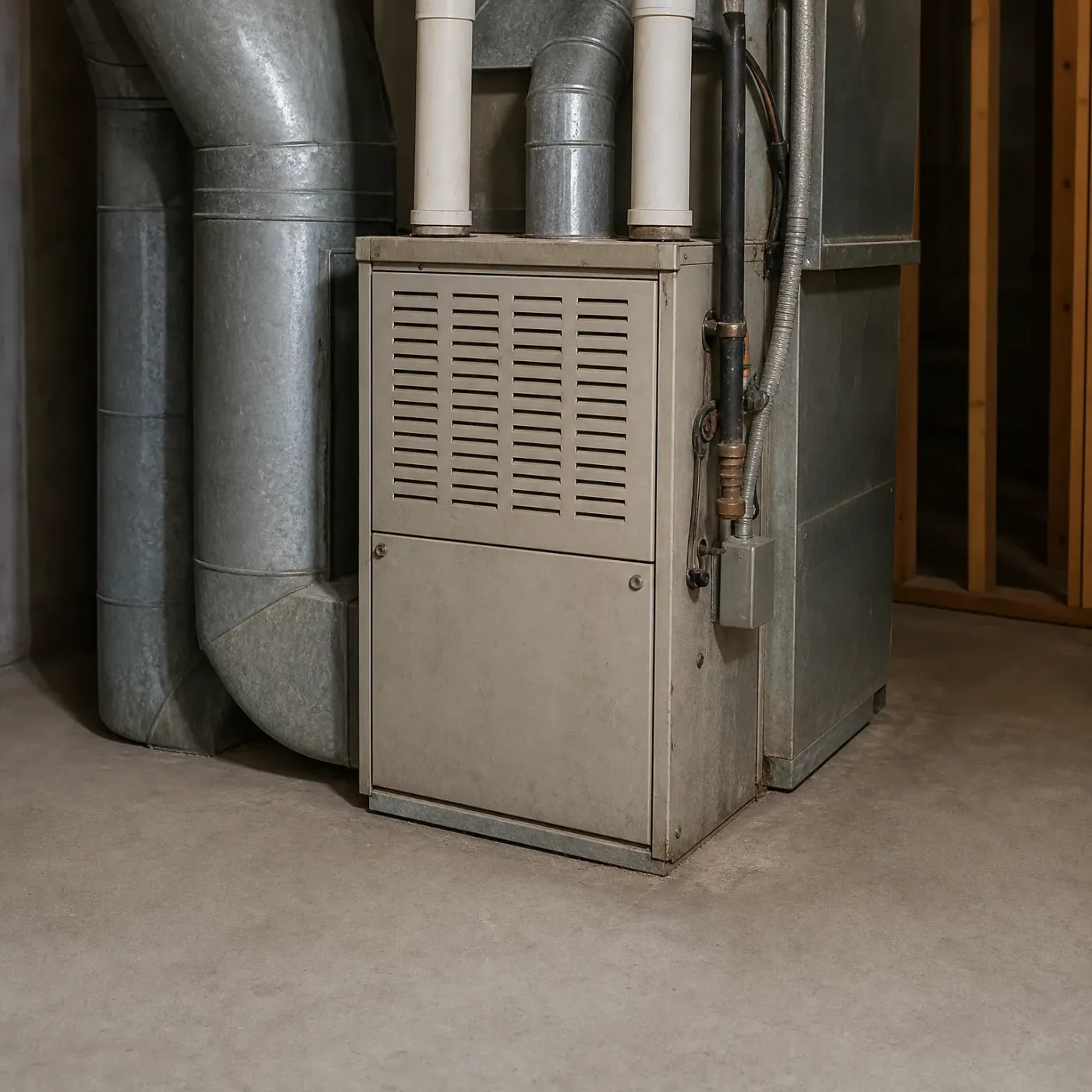
An older gas furnace with two white PVC vent pipes stands on a concrete basement floor beside galvanized sheet-metal ductwork, flexible conduit, and piping along a wall.

Smell that won't quit

This furnace keeps smelling the same way every time it kicks on, hour after hour, day after day. That's not dust burning off anymore. Something inside the cabinet, a cracked part or a wiring issue, is making its own smell, and it needs someone to open it up and look.

A woman with dark hair in a bun wearing a cream knit sweater sits on a gray sofa in a bright living room, looking off to the side.
A woman wrapped in a knit blanket sits on a gray sofa in a living room, looking toward a bright window with houseplants and an armchair in the background.
A woman in a gray cowl-neck sweater sits on a light sofa with cushions, smiling and looking to the side, with a kitchen and window visible behind her.
A woman with dark hair in a bun, wearing a light linen shirt, sits on a sofa and looks to the side, with a window, houseplants and a kitchen with pendant lights blurred behind her.

The right pro for this job

A smell that won't quit after the first hour means something inside the furnace needs a look before you run it again. Maybe it's dust still cooking off a crack in the heat exchanger, maybe it's a wire insulation starting to go, maybe it's the blower motor working harder than it should. You can't tell which from the basement, and guessing wrong with a gas furnace isn't worth it. Finding someone qualified to check it usually means a string of calls, explaining the same smell to each one, then sitting with quotes trying to figure out who actually knows what they're doing. That's the part you can skip. Oklahoma winters don't wait, and neither does a furnace that's already telling you something's off. Get matched with a contractor who knows gas furnaces and can tell you, specifically, what's making your furnace smell like burning, so you're not running it blind through the next cold snap wondering if tonight's the night it gets worse.

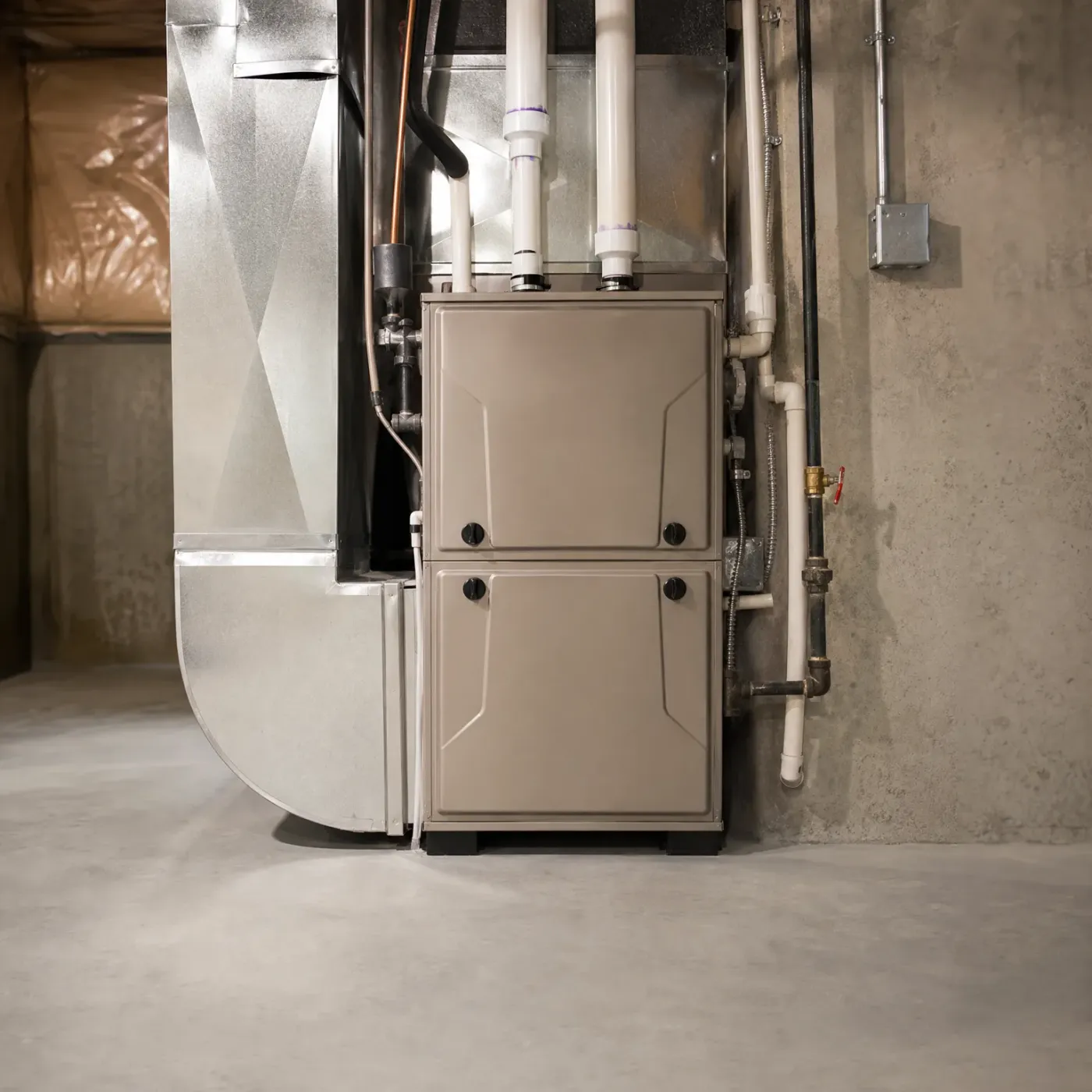
A beige high-efficiency furnace stands on a concrete basement floor beside sheet-metal ductwork, with white PVC vent pipes, flexible conduit and copper and steel piping running up a concrete wall to an electrical box.

Furnace running clean

The burner fires, the blower pushes air through the ducts, and nothing smells off after that first hour. Flue gas goes up the PVC pipe and out, not into the basement. This is what a furnace sounds and smells like when it doesn't need a repair call.

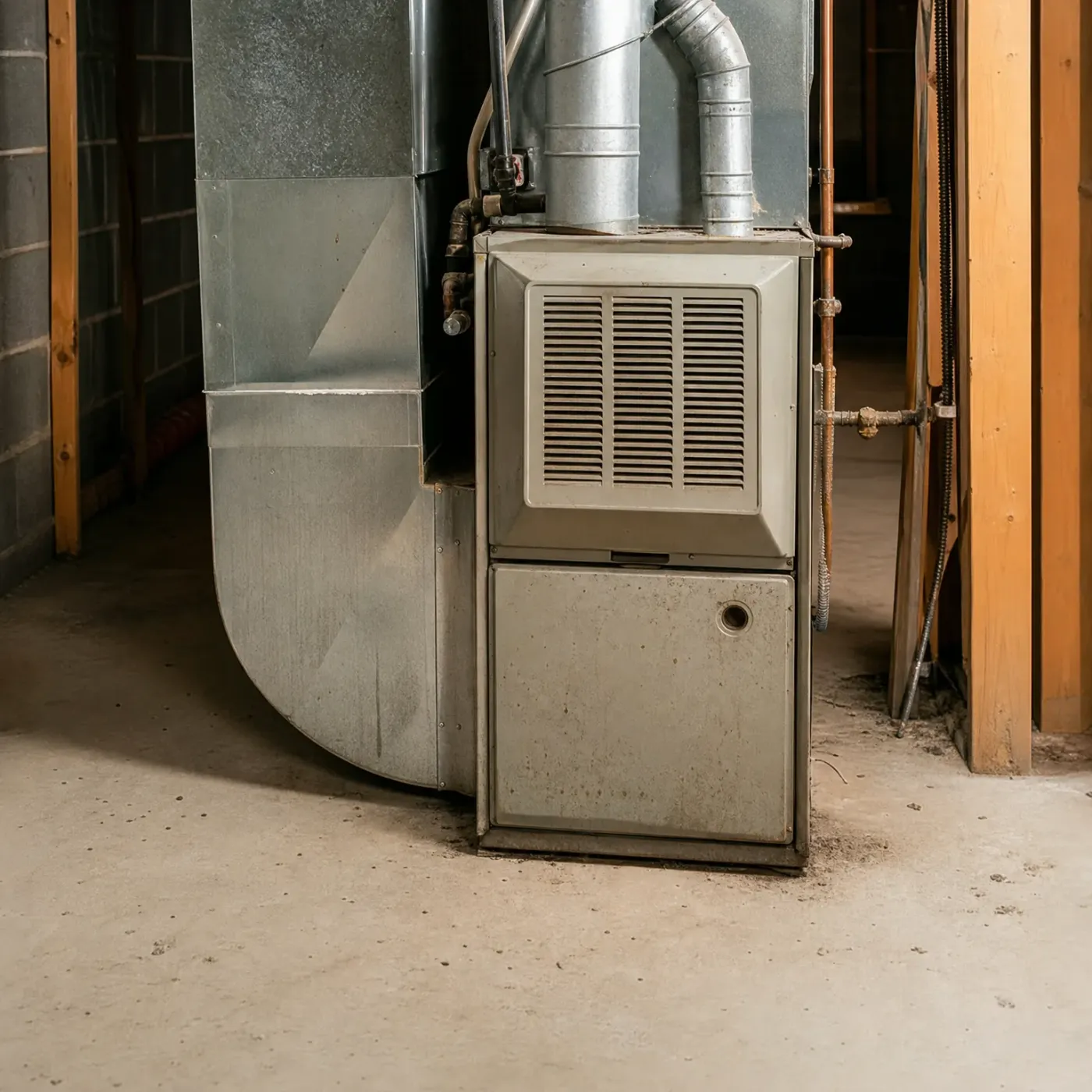
An older gas furnace with a louvered front panel stands on a concrete basement floor beside large sheet-metal ductwork, a metal flue pipe, copper piping and wood framing.

Furnace in trouble

Dust sits thick around the base of an older unit that hasn't been serviced in a while. A cracked flue connection, a failing gas valve, or a blower motor running hot can all put a burning smell into the air long after the first cycle. That's worth a technician's visit before you run it again.

A beige sheet-metal furnace with a louvered upper panel stands on a concrete basement floor, connected to galvanized ductwork, white PVC vent pipes, and a metal gas line with an electrical box.
Before you get your furnace repair
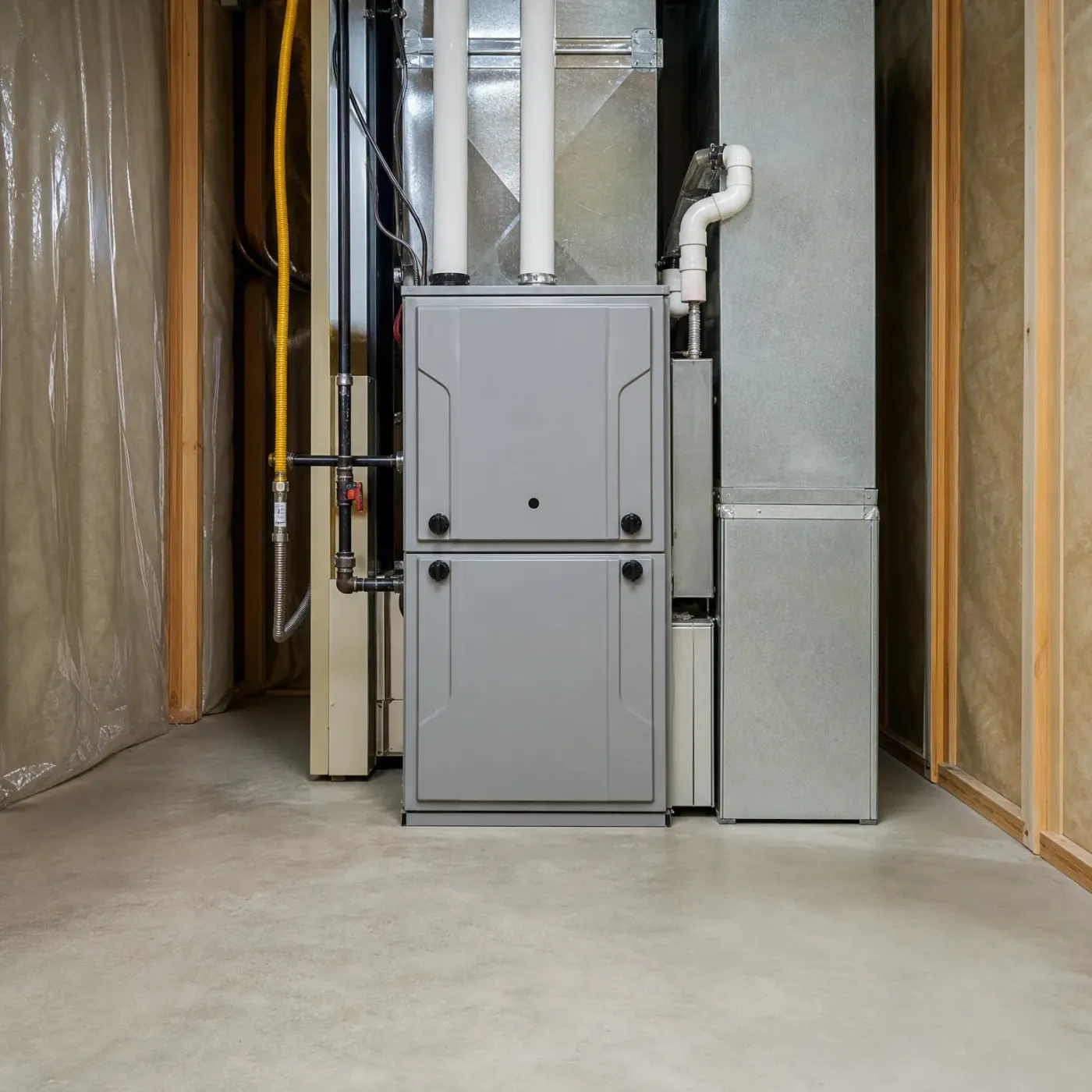
A gray high-efficiency furnace with white PVC vent pipes stands in an unfinished basement beside sheet-metal ductwork, gas piping, and insulated stud walls on a concrete floor.
After you get your furnace repair

The heat exchanger is what keeps flue gas and the air going into your ducts apart. Air passes over the outside of it, picks up heat, and moves on through the vents while the exhaust stays on the other side and leaves through the PVC or metal pipe. When that metal cracks, the two mix, and what reaches your living room isn't the dust smell from a furnace waking up after months off. The blower motor sits right next to the burner, and the wiring running to it can wear thin from the heat over the years. When that insulation starts to go, it gives off a sharp smell as it heats, different from anything burning off dust. A gas burner needs steady air to burn clean. If it's dirty or something's blocking the intake, it burns unevenly and keeps giving off an odor instead of clearing up. None of these fix themselves by running the furnace longer. They need someone to open it up and look.

How the smell gets into your air

  • A furnace heats air by passing it over a heat exchanger, a metal chamber that keeps the flue gas separated from the air going into your ducts.
  • Flue gas leaves through the PVC or metal pipe to the outside, which is why a working furnace shouldn't smell like anything after the first hour.
  • A crack in the heat exchanger lets flue gas mix into the air stream instead of venting outside, and that's a different smell than dust burning off.
  • The blower motor and its wiring sit close to the burner, so worn insulation on a wire can give off a sharp, electrical smell when it heats up.
  • Gas burners draw air from the room or a dedicated intake, and a dirty or blocked burner can burn unevenly and give off an odor that doesn't fade.
  • A furnace that's been sitting unused since spring has dust on the burner and heat exchanger, and that's the smell that clears in under an hour.
A smiling older woman with gray hair in a cream knit sweater stands in a dimly lit kitchen beside a window showing snow outside, with a round loaf of bread on the counter in the foreground.
A woman and a child wrapped together in a thick knitted blanket on a sofa, both with eyes closed, with a lit table lamp and houseplant in the dim background.

Winter nights average 30°F statewide

Oklahoma nights average 30°F through December, January and February, so your furnace is doing real work most nights, not just taking the edge off. That's more hours for dust to burn off early on, and more hours for a bad part to keep smelling instead of clearing up on its own.

NOAA nClimDiv 1991-2020 county normals weighted by homes

A burning smell that fades in an hour is dust clearing off the burner. One that keeps coming back, or changes to plastic or metal instead of fading, is your furnace telling you something inside it needs attention before the next cold night in Oklahoma. You don't have to spend an evening on the phone with different repair companies trying to find one that can actually come out, explaining the same smell and the same furnace over and over, then sitting on quotes trying to figure out who to trust. Getting matched with a contractor who knows furnaces and knows what that smell usually means takes that off your plate. You still have a furnace that needs a look. But you're not the one tracking down who's going to look at it, and the people you're keeping warm aren't waiting on you to find the right call to make.

Sunlight falls across a beige upholstered sofa with a textured woven cushion and a chunky knit throw, beside a dark wood cabinet holding a ceramic vase with green leafy branches, near a white-framed window.
A sunlit corner of a room with a wooden side table holding a ceramic vase of green foliage and a wooden bowl, beside a light upholstered sofa with a knit throw and rust-colored pillow, with window shadows cast on a beige wall.
A sunlit room corner with beige walls, a white-framed window with sheer cream curtain, wood floor with a light rug, and a woven basket holding a knit blanket.
A beige ceramic vase holding a leafy green branch sits on a wooden cabinet in a corner, with sunlight through a sheer curtain casting leaf shadows on the wall.
A grey upholstered sofa with a rust-orange velvet cushion and a textured throw sits beside a window with linen curtains, next to a wooden side table holding a pale ceramic vase of olive branches.

Matched to your furnace job

Describe your furnace job once, to one pro.

Skip the calls

It costs nothing to send, and you don't have to hire anyone.