Why your furnace won't turn on in an Oklahoma winter
Send the request and finding a pro stops being your problem.
Your furnace stays off on a cold Oklahoma morning and the house starts losing ground fast. Gas heat is what most homes here run on, and when it quits, you notice within the hour.
A furnace that won't fire usually comes down to one part. The igniter doesn't glow. The flame sensor is dirty and shuts the gas valve as a safety step. The inducer motor doesn't start, so the control board never lets gas flow. A thermostat with a dead battery can also leave the furnace sitting idle with no call for heat at all. None of these are things you can see from across the room, and most aren't safe to chase down yourself with gas involved.
Normally this means working the phone. Calling a few contractors, waiting for one to answer, explaining what the furnace is doing, then doing it again for the next one, and the one after that. Then sitting with two or three quotes trying to guess which is fair when you don't know what the part costs or how long the job should take. On a day when the house is already cold, that's a lot to ask.
This page skips that part. Send the form with what your furnace is doing, and the job of finding someone becomes someone else's problem instead of yours. No more calling around, no more repeating the story to a new voice each time. A licensed contractor who works on Oklahoma furnaces gets what you sent and takes it from there.
You still get a furnace that's actually fixed, by someone who knows what a bad igniter looks like versus a dirty sensor versus a board that's stopped reading the thermostat. The difference is you're not the one running down who that someone is while the house gets colder around you.
A furnace that won't start almost always fails at one of a few points, and the thermostat calling for heat is only the first of them. The igniter has to glow hot enough to catch the gas, and a cracked or weakened one won't get there, so the burners never light. A flame sensor coated with a film of residue can't tell the furnace a flame is burning, so the system shuts itself down a few seconds after startup as a safety measure. The inducer motor has to pull enough air through to satisfy a pressure switch before gas is even allowed to flow, and if it's failing or blocked, the furnace won't try. Each of these stops the same way from the thermostat: nothing happens, or it starts and quits. On a morning when it's below freezing outside, a furnace stuck in that loop is not something to leave for the weekend.
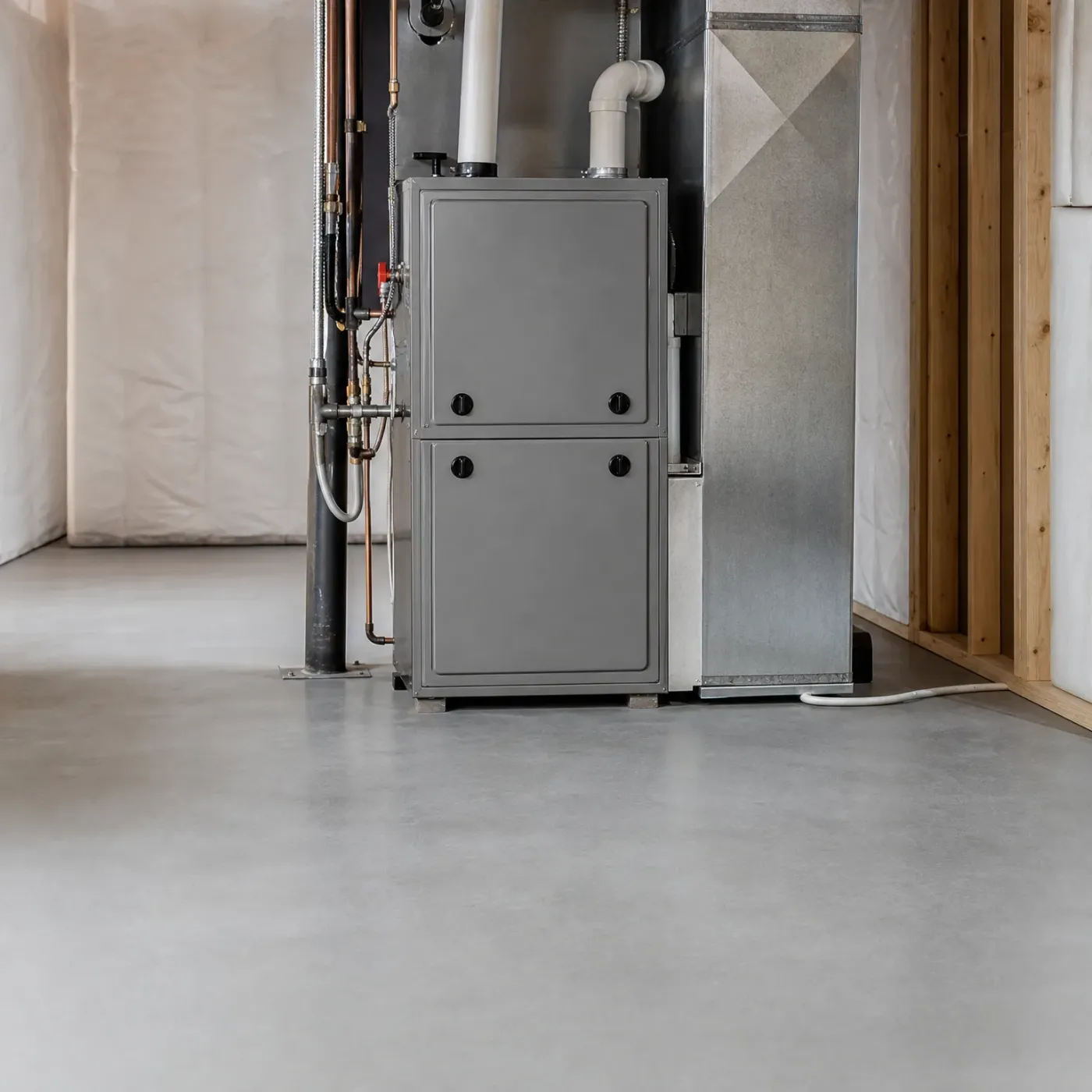
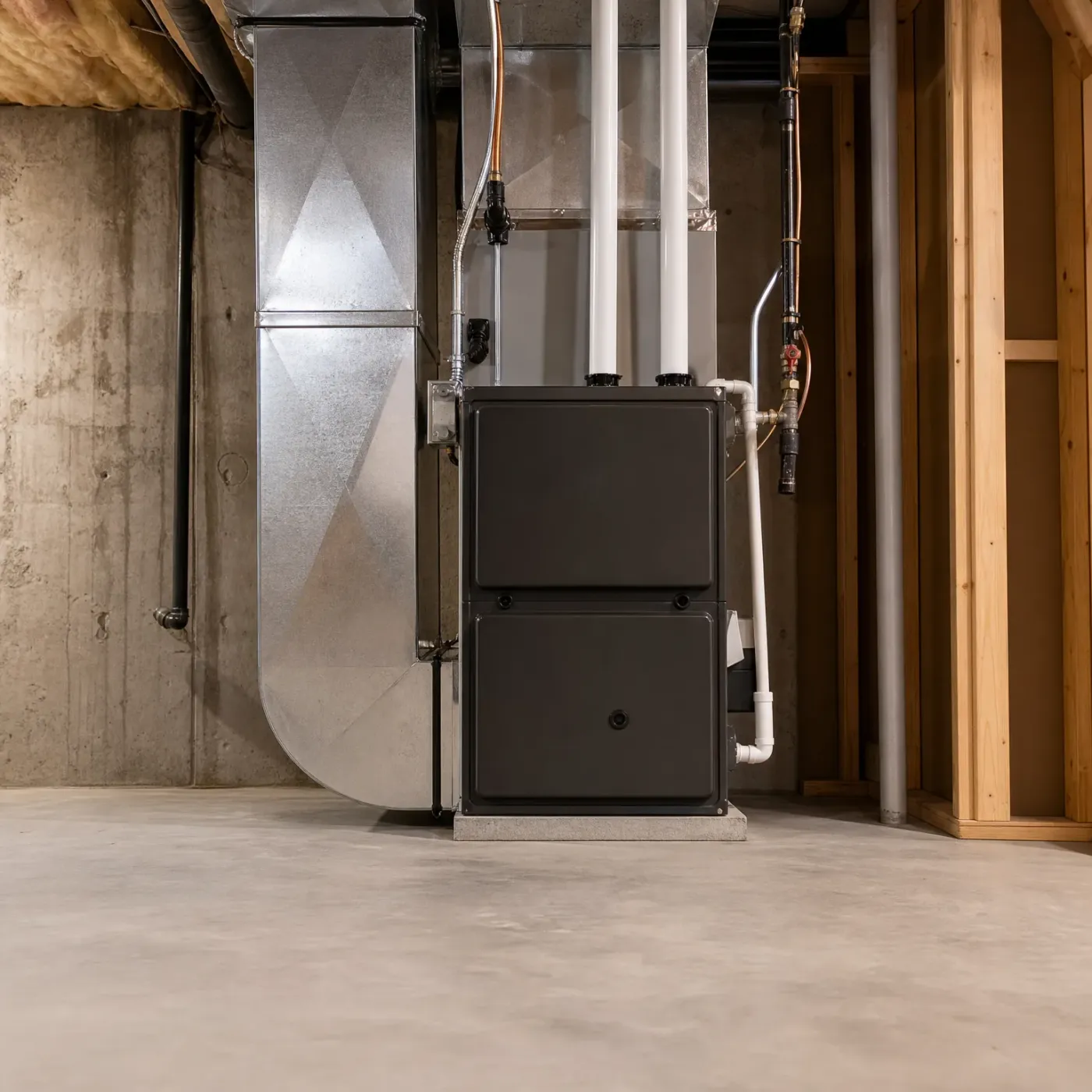
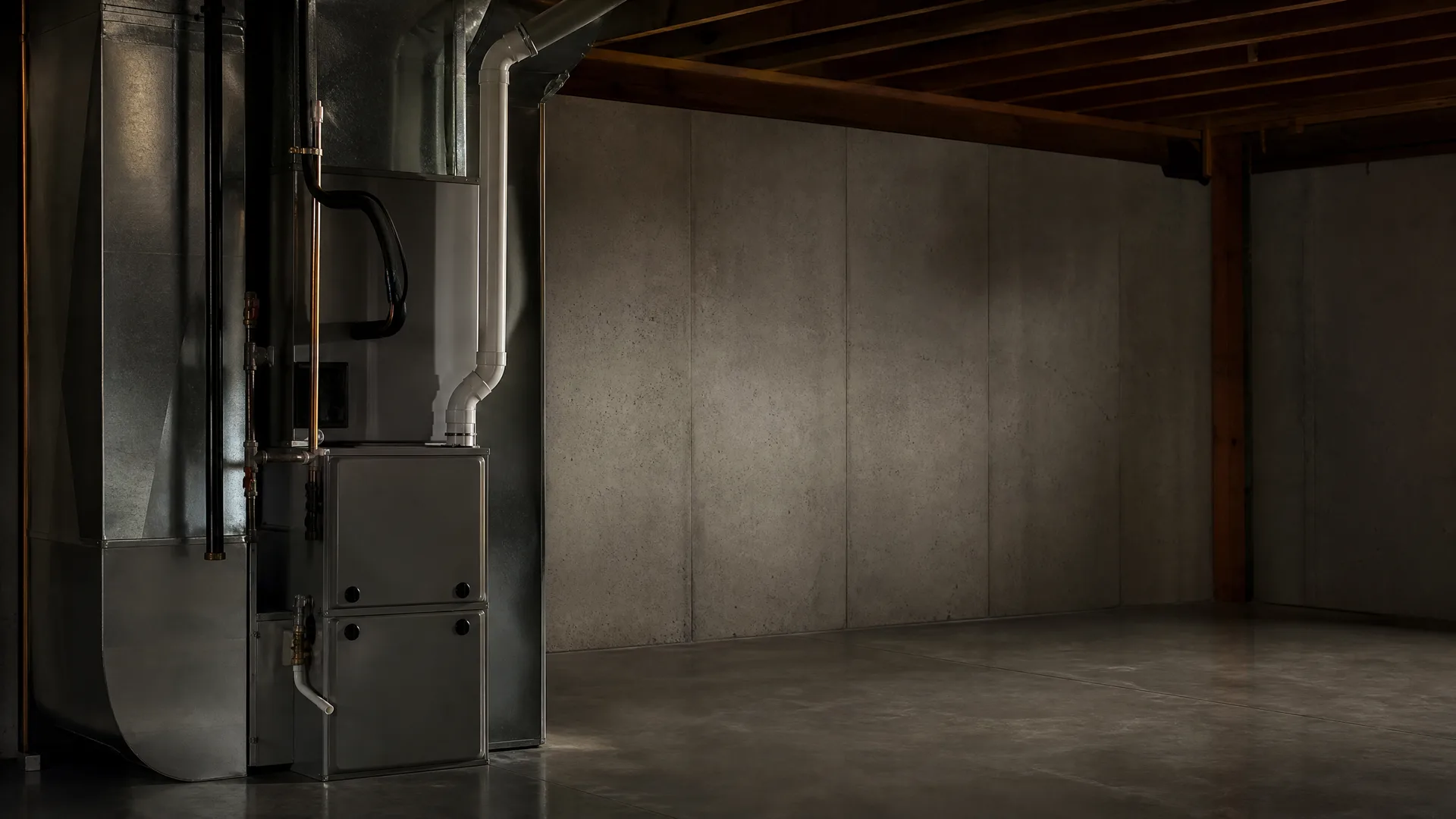
A furnace like this fires on the first call and runs quiet through the night, holding the house steady while it's near zero outside.
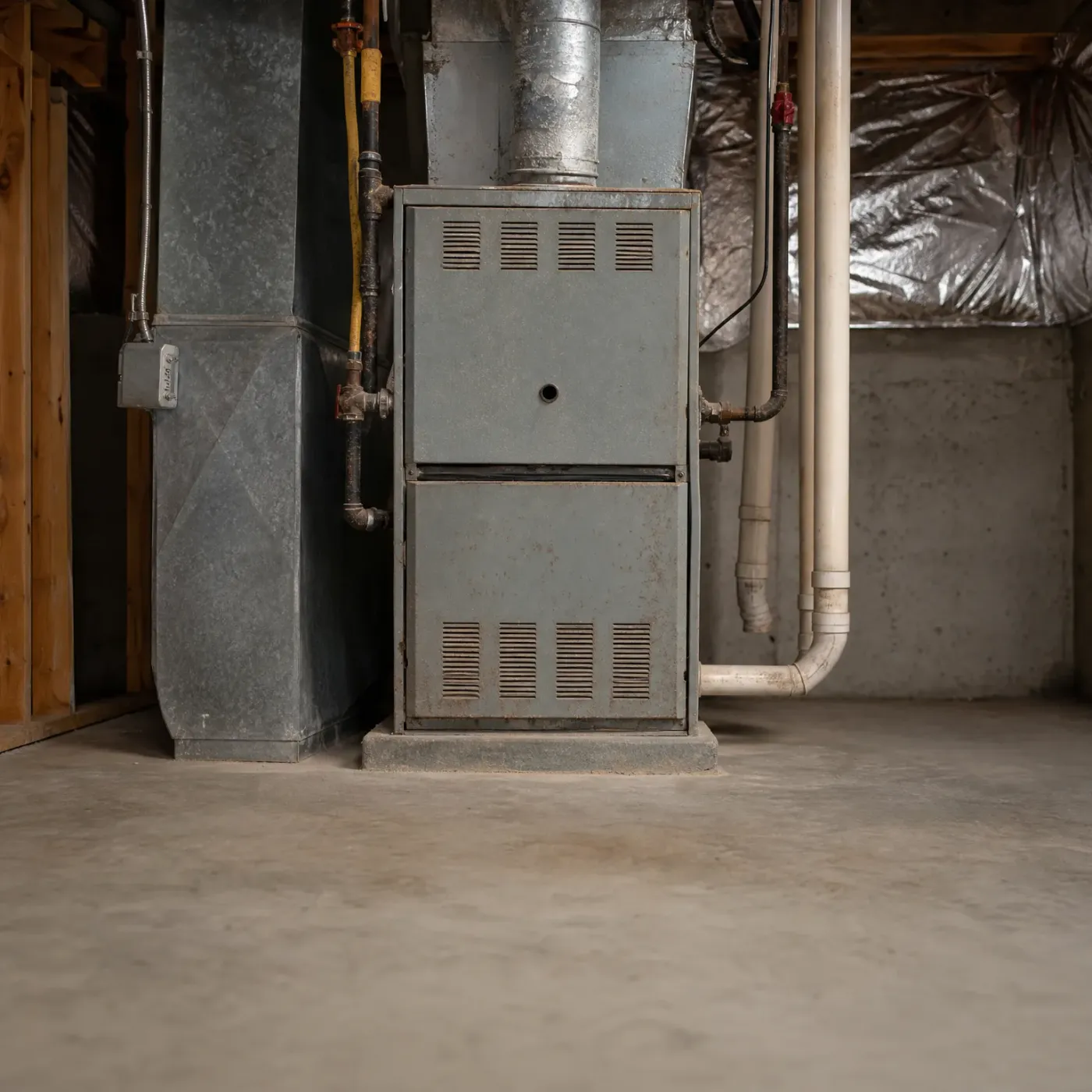
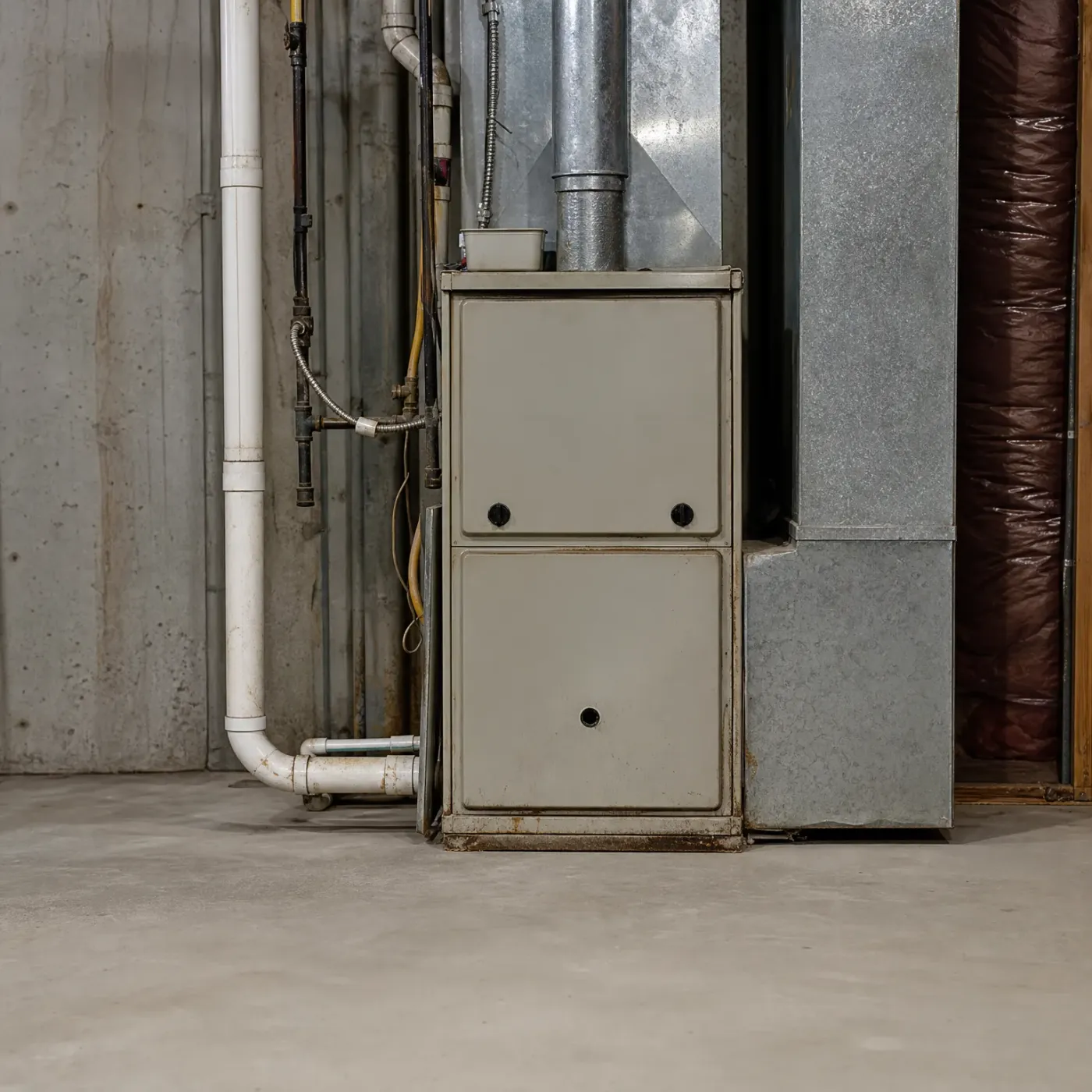
Rust on the cabinet and a worn gas line like this often sit alongside a cracked igniter or a failed inducer motor, the kind of wear that ends in a no-start.
Call Now or Wait It Out
Call now
A furnace that won't fire on a morning near zero can mean pipes freezing before a tech ever gets scheduled through the usual channels.
Skipping the round of calling three or four companies and repeating the same symptoms to each one saves the hours you don't have.
One form gets matched to a licensed contractor in your area, so you're not the one sorting through reviews and availability at 6 a.m.
A cracked igniter or a failed inducer motor only gets fixed once someone is actually in the house, so the clock starts when you send the form, not before.
Comparing quotes one by one, waiting on callbacks, and re-explaining the problem to each one is the part that goes away, not the repair itself.
Wait it out
If the house is holding heat and nothing smells like gas, there's no danger in taking an evening to think it over.
A furnace that cycles on and off but still runs is a different problem than one that won't start at all, and it may hold until morning.
Waiting means you're still the one who has to find a contractor later, explain the same symptoms, and sort through who can actually come.
Oklahoma mornings swing cold fast, and a furnace that struggled today can fail outright tomorrow with no more warning than it gave you now.
The part that's failing, whether it's the igniter or something else, doesn't repair itself overnight no matter how mild the next day turns out.
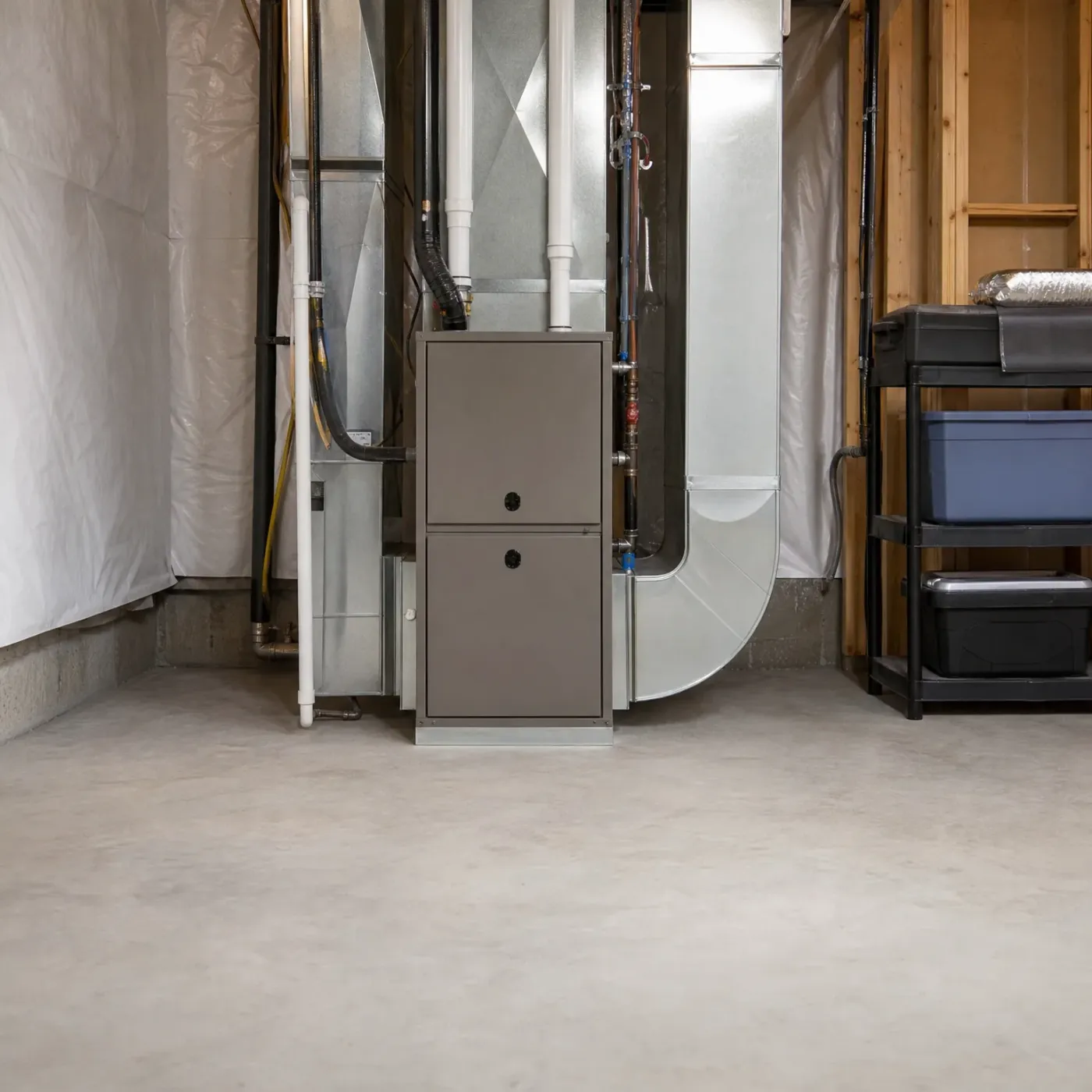
Running the way it should
A furnace like this fires on the first call and keeps the ductwork above it moving warm air through the house. The gas piping and exhaust run clean to the outside, and the burners light every time the thermostat calls. Nothing about it needs your attention.
Headed for a no-heat call
Rust on the cabinet and aging flexible gas piping like this often point to a furnace that's starting to miss. The same wear that shows on the outside can mean a cracked igniter or a failing inducer motor inside, the kind of failure that shows up as a furnace that won't turn on at all.
A cold snap in Oklahoma doesn't wait for business hours, and neither does the house losing heat. Once you've checked the thermostat and the breaker and the furnace still won't fire, the next step is normally the hard one: pulling up a list of HVAC companies, calling each one, describing the same dead igniter or silent inducer motor three or four times, then waiting to see who calls back first. That's the part this hands off. Send the request once and you're done describing the problem to strangers. One contractor gets it, not five, so you're not stuck comparing quotes while the house keeps cooling. You still need someone licensed to get the burners lit again, but you're no longer the one tracking down who's available and who isn't. With the furnace down on a morning near freezing, that's the hour you don't want to spend on the phone.
Why the igniter fails first
Most furnaces use a silicon nitride igniter, and it's the part that fails more than any other. It has to heat up to around 2500 degrees every single cycle to light the gas, and that heating and cooling wears on it over years of use. By the time a furnace is eight or ten years old, a cracked igniter is one of the first things a tech checks. You won't see it glow at all, or you'll see it glow weak and orange instead of white, and either way the burners never catch.
What the inducer motor does
Before the igniter even gets a chance to work, the inducer motor has to run first and prove it's pulling exhaust out through the flue. The furnace's control board waits for a pressure switch to confirm that draft before it sends power to the igniter at all. If the inducer motor is weak, seized, or the vent pipe is blocked, that switch never closes, and the whole sequence stops right there. The furnace won't even attempt to light, and from the thermostat it just looks dead.
Winter nights average 30°F statewide
On a typical winter night here, the temperature outside settles around 30°F. That's cold enough that a furnace cycling on and off all night is normal, and a furnace that stays off is a problem fast, well before sunrise.
NOAA nClimDiv 1991-2020 county normals weighted by homes
Working the way it should
This one sits clean on its pad, the ductwork tight above it and the gas lines and exhaust pipe running straight to where they need to go. Nothing is leaking, nothing is rusted, and the burners catch every time the thermostat calls for heat.
Working against you
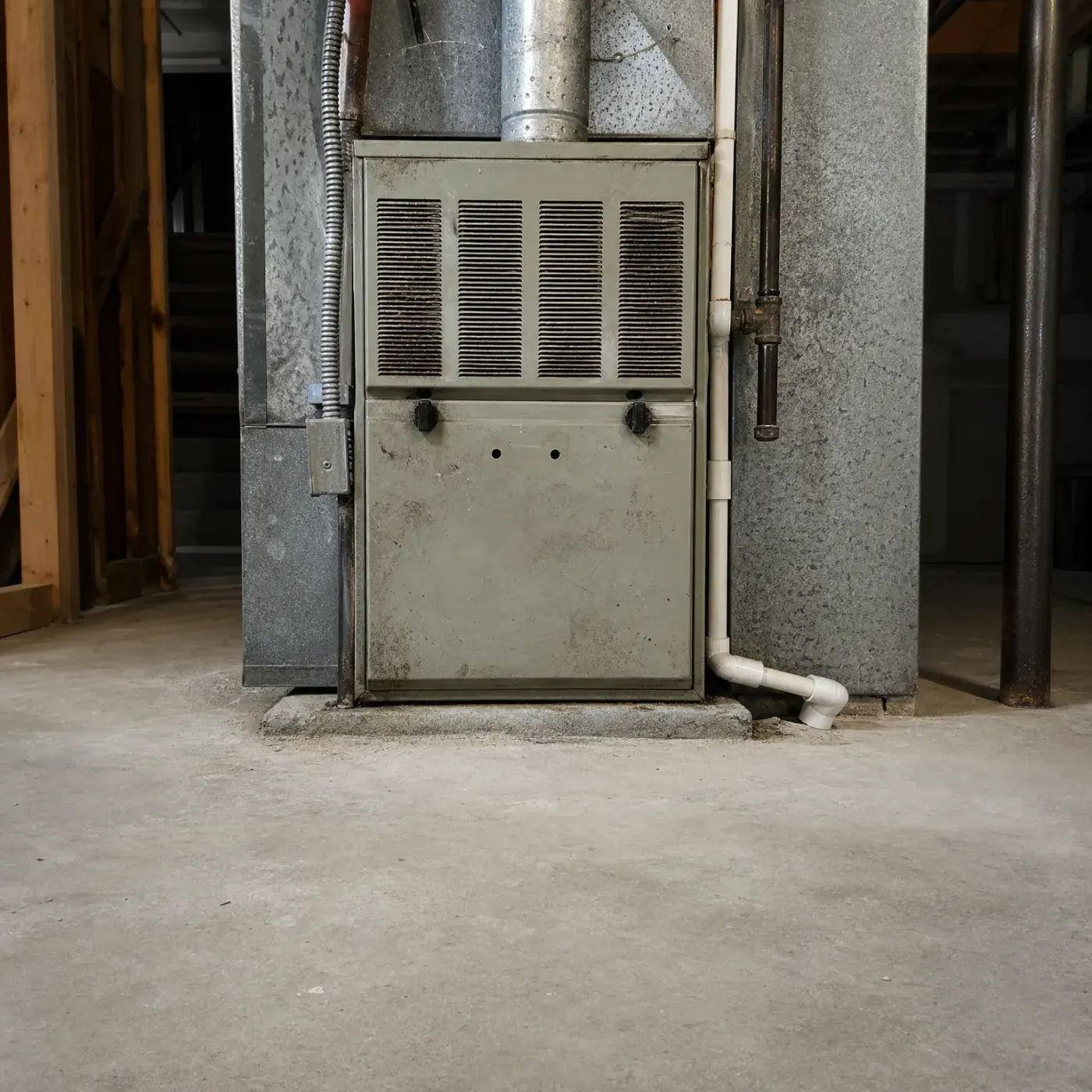
This furnace is older and it shows. The flexible conduit running off to the side and the drain pipe curving down to the floor are both places a problem can start. An igniter or inducer motor on a unit like this has already put in years of work, and it's closer to the point where one of them gives out on a cold morning than it was when it was new.
A furnace that won't fire comes down to one part, not a mystery
A cracked igniter, a failed inducer motor, a flame sensor coated with residue. The furnace stops at one of these points, and a licensed tech can tell you which one once they're standing in front of it. The thermostat and the breaker were worth checking first. Past that, it's not something to keep guessing at while the house drops toward 30°F outside.
What usually eats the evening isn't the repair itself, it's getting to someone who can do it. Pulling up company after company, explaining the same dead furnace to each one, waiting on quotes that come back at different times from different people. Send the form once and that part is done. Finding the right contractor stops being your problem to solve tonight.
Hand off the search today
Explain the job once and skip repeating it on every call.