Tell us about the job
Takes about a minute. No obligation.
A contractor diagnosing a furnace repair in Cotton County starts with the unit itself: its age, how it was installed, and how consistently it has been serviced. 89 severe weather events were recorded in Cotton County, Oklahoma between 2015 and 2024. At that rate, severe weather is a real presence but not the dominant stress on a heating system the way it would be in the hardest-hit areas. A heat exchanger that has cracked or a blower motor that has seized is more likely carrying the years against it than a weather record. That shapes where a contractor looks first and what the repair scope turns out to be.
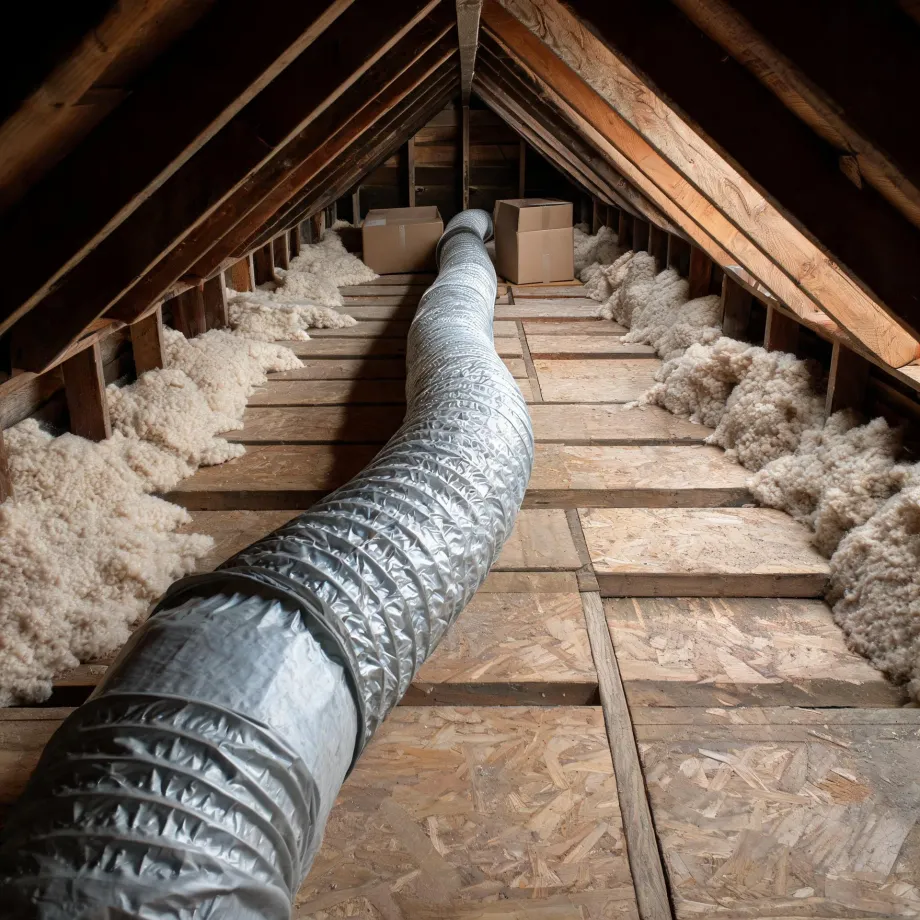
Ductwork in a house this old has had time to collect debris, lose sealing at joints, and develop cracks a contractor finds only once the furnace is open and airflow is traced back through the system. Half the homes in Cotton County, Oklahoma were built in 1971 or earlier (2020-2024 ACS 5-year). That span matters for repair work because the parts a furnace here actually needs are determined by what the opened heat exchanger and blower assembly turn out to contain, not by the symptoms reported before anyone touched the unit. A cracked heat exchanger reads one way on a thermostat and another way under inspection.
The Parts of a Furnace a Contractor Checks First
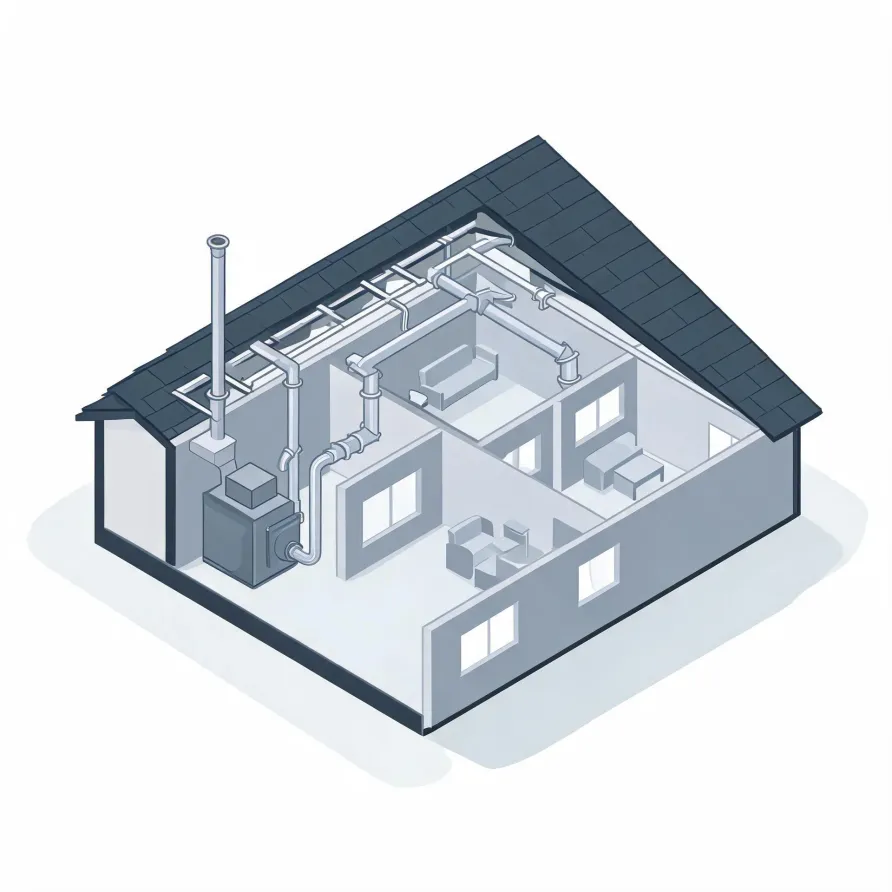
The furnace itself sits in a utility space, basement, or closet and is the unit that generates heat. Inside it, the heat exchanger, burners, and blower motor are the pieces a contractor goes to first when the system is not performing. A cracked heat exchanger, a failed ignitor, or a seized blower motor each produces its own set of symptoms.
The flue pipe runs from the furnace to an exterior vent and carries combustion gases out of the house. The thermostat, mounted on a living-space wall, is the control signal the whole system answers to, and a fault there can look like a furnace problem when the furnace itself is fine.
The drawing shows a general layout of these components, and a licensed contractor determines which of them applies to the specific setup in your house.
Get matched in Cotton CountyCotton County, Oklahoma, by the numbers
89 severe weather events were recorded in Cotton County, Oklahoma between 2015 and 2024.
NOAA National Centers for Environmental Information, Storm Events Database, bulk CSV export, events 2015-01-01 through 2024-12-31.Half the homes in Cotton County, Oklahoma were built in 1971 or earlier (2020-2024 ACS 5-year).
U.S. Census Bureau, 2020-2024 American Community Survey 5-Year EstimatesCotton County, Oklahoma holds 2,697 housing units (2020-2024 ACS 5-year).
U.S. Census Bureau, 2020-2024 American Community Survey 5-Year EstimatesOwners occupy 80.3% of the occupied homes in Cotton County, Oklahoma (2020-2024 ACS 5-year).
U.S. Census Bureau, 2020-2024 American Community Survey 5-Year EstimatesRules & Standards Governing Furnace Repair in Cotton County, Oklahoma6 sourced rules & standards
What HVAC Repair Looks Like in Cotton County
Non-weatherized gas furnaces manufactured on or after November 19, 2015 must reach 80.0 percent AFUE.
Non-weatherized oil-fired furnaces manufactured on or after November 19, 2015 must reach 83.0 percent AFUE.
Mobile home gas furnaces manufactured on or after November 19, 2015 must reach 80.0 percent AFUE.
Non-weatherized gas furnaces manufactured on or after December 18, 2028 must reach 95.0 percent AFUE, up from the 80.0 percent minimum that applies to units manufactured before that date.
Rules That Apply to HVAC Repair in Cotton County, Oklahoma
An Oklahoma mechanical licence is valid statewide, and a contractor licensed by a local authority who works only in that locality is not required to hold the state licence at all.
Oklahoma requires a Construction Industries Board licence for mechanical work: nobody may do or advertise mechanical work as a journeyman or contractor without the right licence.
Severe Weather Events in Cotton County
Oklahoma weather puts real load on heating equipment, and Cotton County is no exception to that pressure. Furnaces that cycle hard through weather extremes wear faster, and when something breaks, the repair is a local job.
89 severe weather events, 2015–2024. Source: NOAA National Centers for Environmental Information, Storm Events Database.