Tell us about the job
Takes about a minute. No obligation.
A furnace contractor working a repair in Bryan County has to settle one question before anything else: how much of what they are seeing is wear from seasons of hard running, and how much traces back to how the unit was installed or maintained. 101 severe weather events were recorded in Bryan County, Oklahoma between 2015 and 2024. At that rate, severe weather is a standing feature of life for every system in the county, and it shows up in heat exchangers, pressure switches, and draft inducers that have been cycled hard and often. A contractor who skips past that history and quotes a straight parts swap may be pricing the wrong repair.
Furnace parts availability shapes how a repair job gets priced here before anything else does. Half the homes in Bryan County, Oklahoma were built in 1989 or earlier (2020-2024 ACS 5-year). A heat exchanger or burner assembly pulled from a unit running in stock that old may belong to a product line a manufacturer discontinued years back, which pushes a contractor toward a supplier search rather than a catalog order. If the part exists, the repair proceeds on its merits. If it does not, the scope changes entirely, and that answer does not come from the model number on the door.
The Parts of a Furnace a Contractor Checks First
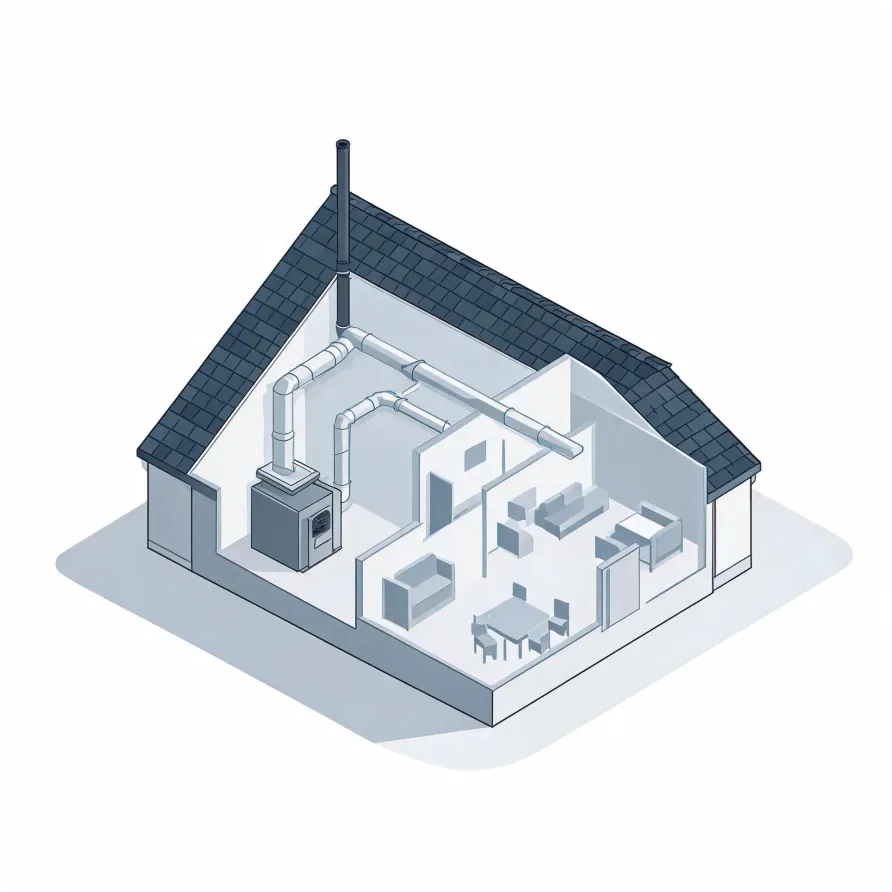
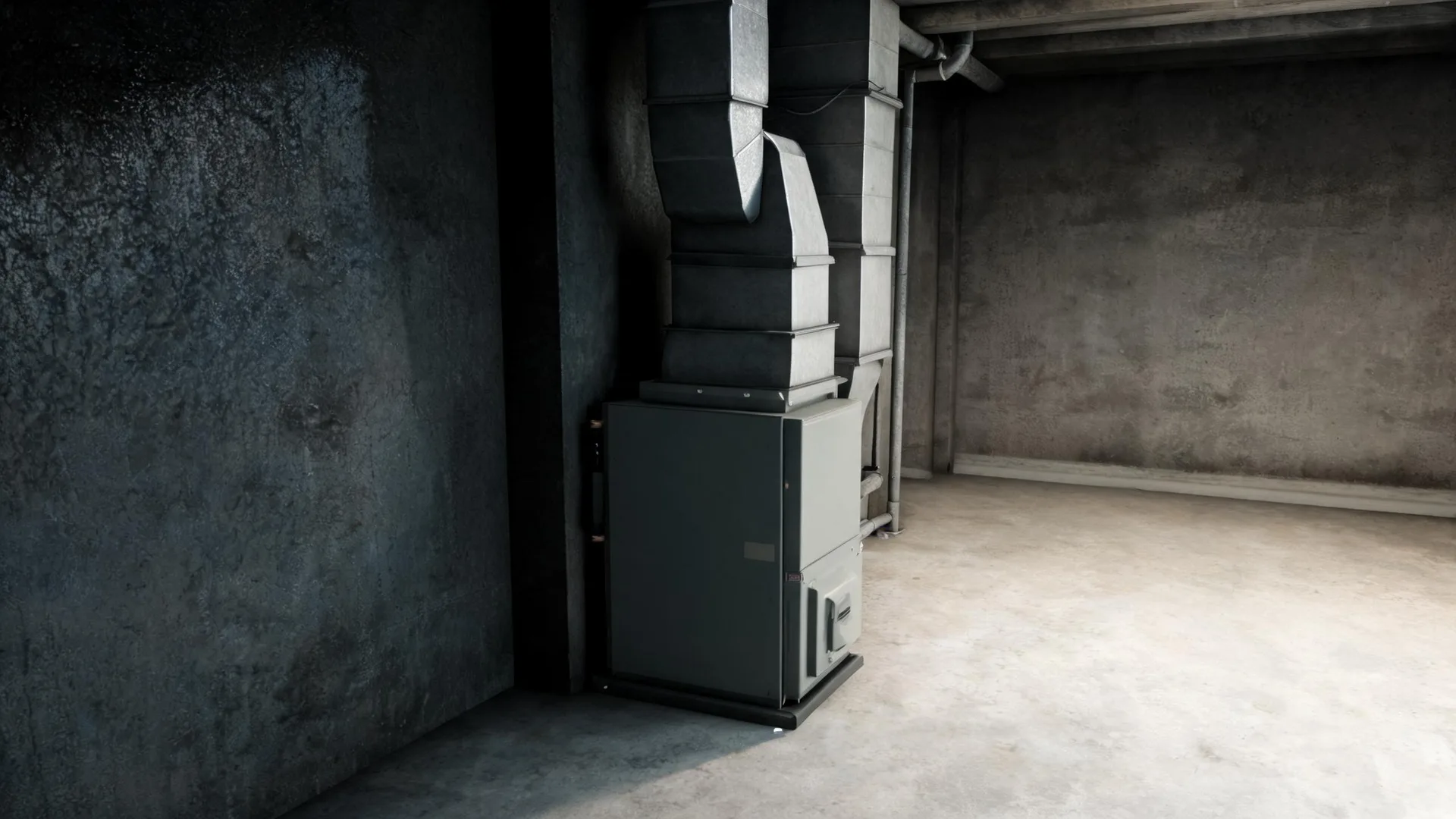
The furnace itself sits in the basement, utility closet, or garage and is the heart of the system. Inside it, the heat exchanger and the burner assembly are the pieces a contractor goes to first when heat is absent or inconsistent. A cracked heat exchanger or a failed burner shows up fast in diagnostics.
The blower motor pushes conditioned air out through the supply side and sits inside the furnace cabinet. The flue and venting components run from the unit to the exterior, and the control board ties the whole sequence together. Each of these can be the source of a fault, and each shows different symptoms when it is.
The drawing shows a general layout of a furnace system, and a licensed contractor determines which components apply to the specific setup in your home.
Get matched in Bryan CountyBryan County, Oklahoma, by the numbers
101 severe weather events were recorded in Bryan County, Oklahoma between 2015 and 2024.
NOAA National Centers for Environmental Information, Storm Events Database, bulk CSV export, events 2015-01-01 through 2024-12-31.Half the homes in Bryan County, Oklahoma were built in 1989 or earlier (2020-2024 ACS 5-year).
U.S. Census Bureau, 2020-2024 American Community Survey 5-Year EstimatesBryan County, Oklahoma holds 20,780 housing units (2020-2024 ACS 5-year).
U.S. Census Bureau, 2020-2024 American Community Survey 5-Year EstimatesOwners occupy 63.8% of the occupied homes in Bryan County, Oklahoma (2020-2024 ACS 5-year).
U.S. Census Bureau, 2020-2024 American Community Survey 5-Year EstimatesCodes & Standards Behind Furnace Repair in Bryan County, Oklahoma6 sourced rules and standards
What HVAC Repair Looks Like in Bryan County
Non-weatherized gas furnaces manufactured on or after November 19, 2015 must reach 80.0 percent AFUE.
Non-weatherized oil-fired furnaces manufactured on or after November 19, 2015 must reach 83.0 percent AFUE.
Mobile home gas furnaces manufactured on or after November 19, 2015 must reach 80.0 percent AFUE.
Non-weatherized gas furnaces manufactured on or after December 18, 2028 must reach 95.0 percent AFUE, up from the 80.0 percent minimum that applies to units manufactured before that date.
Licensing Rules for HVAC Repair in Bryan County, Oklahoma
An Oklahoma mechanical licence is valid statewide, and a contractor licensed by a local authority who works only in that locality is not required to hold the state licence at all.
Oklahoma requires a Construction Industries Board licence for mechanical work: nobody may do or advertise mechanical work as a journeyman or contractor without the right licence.
Severe Weather Events in Bryan County
Extreme weather puts real stress on furnace components, from heat exchangers to ignition systems, and Bryan County's climate is part of what determines how hard local equipment has to work. Repair needs in this area are shaped by local conditions, which is why that history belongs on this page.
101 severe weather events, 2015–2024. Source: NOAA National Centers for Environmental Information, Storm Events Database.