Tell us about the job
Takes about a minute. No obligation.
A contractor diagnosing a furnace repair in Johnston County has to separate weather wear from the more ordinary causes before quoting anything. 111 severe weather events were recorded in Johnston County, Oklahoma between 2015 and 2024. At roughly the national midpoint, that count puts severe weather in the background of operating life here rather than the foreground. Components like heat exchangers and igniters that show early failure are more likely carrying the weight of age or infrequent service than of repeated storm stress. The contractor checks both, but the maintenance history usually tells the story first.
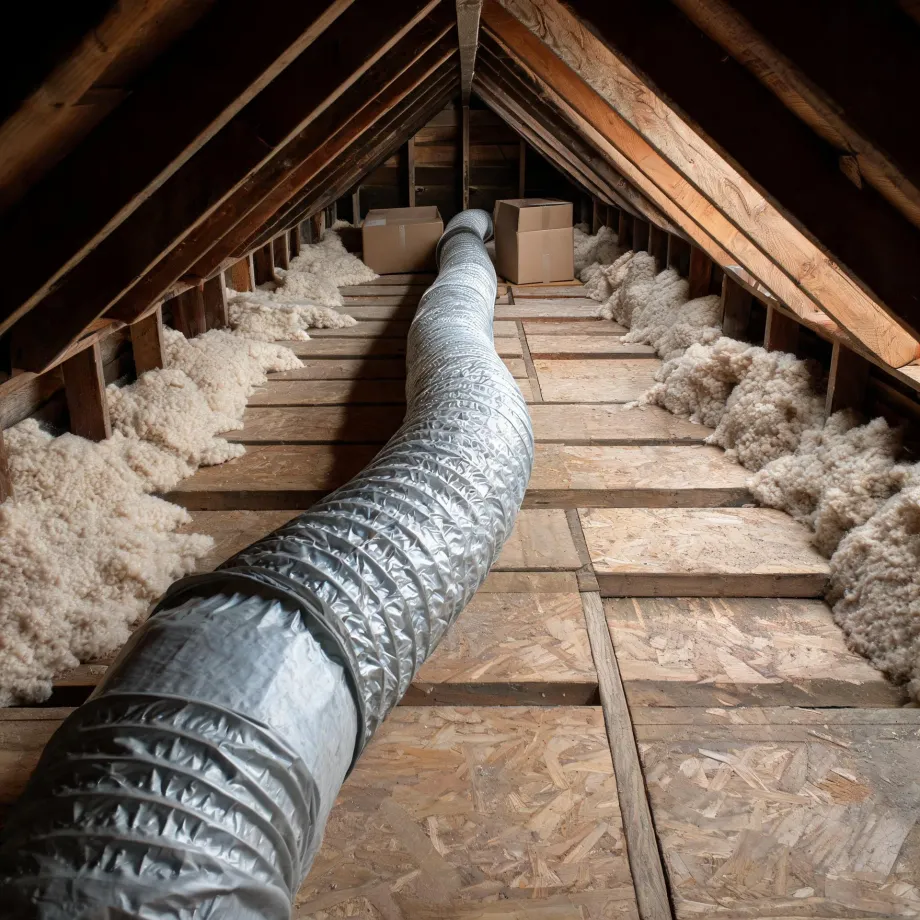
Furnace repair in Johnston County turns quickly on what comes out of the opened unit. Half the homes in Johnston County, Oklahoma were built in 1983 or earlier (2020-2024 ACS 5-year). Stock that old runs systems whose internal components belong to product lines that manufacturers have since discontinued or redesigned, and a contractor opening a heat exchanger or a control board here has to confirm parts availability before a repair scope means anything. If the part is gone, the job changes shape entirely.
The Parts of a Furnace a Contractor Checks First
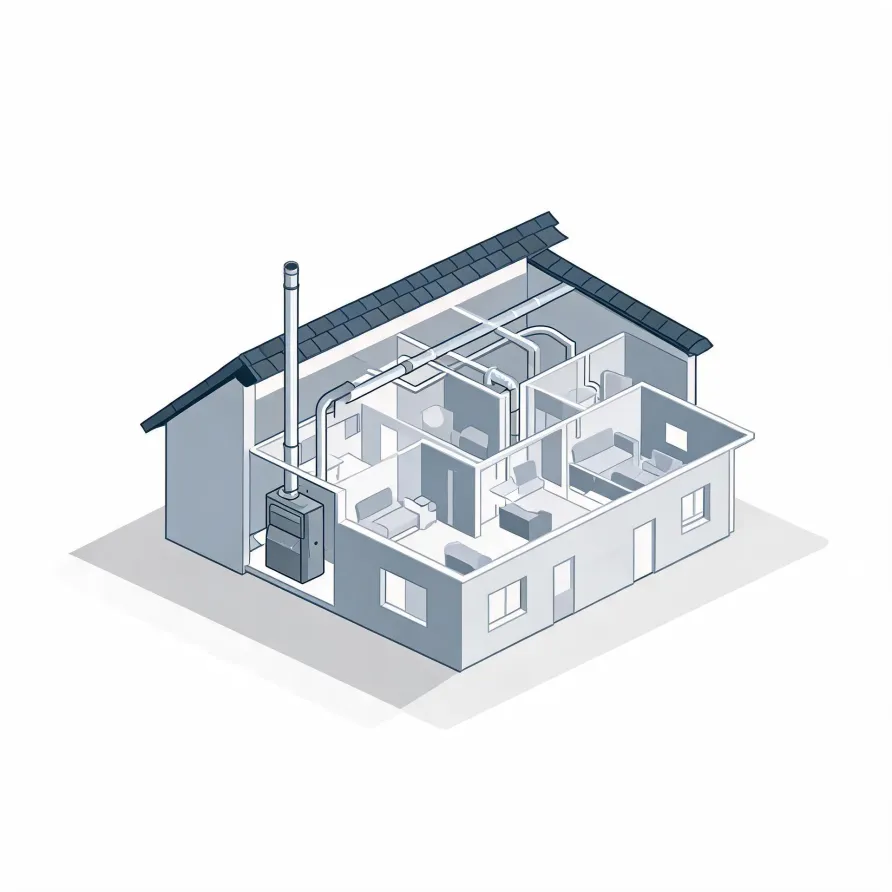
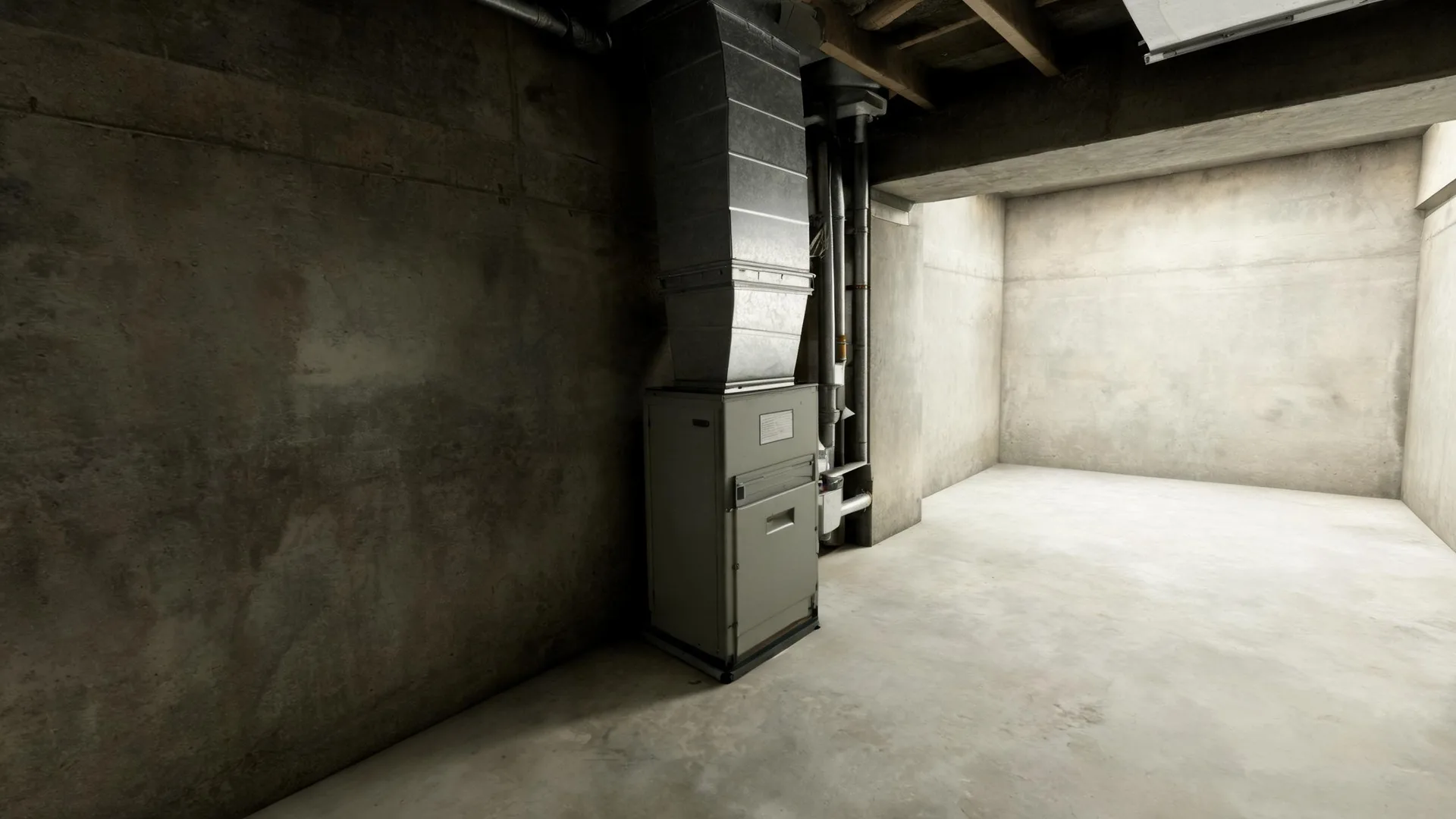
The furnace itself sits in a utility space, basement, or closet and is the piece a contractor goes to first. Inside it, the heat exchanger and the burners are the components that do the actual work of producing heat. When either one fails, the whole system either stops running or runs in a way that signals trouble quickly.
The blower motor pushes conditioned air out through the supply side of the system and sits inside the furnace cabinet. The flue and venting components run from the furnace to an outside wall or roofline, carrying combustion gases out of the house. The thermostat, mounted on an interior wall, is the control point a contractor checks early because a wiring or calibration fault there can mimic problems that look like furnace failure.
The drawing shows a general layout of these components, and a licensed contractor determines what applies to this particular house.
Get matched in Johnston CountyJohnston County by the numbers
111 severe weather events were recorded in Johnston County, Oklahoma between 2015 and 2024.
NOAA National Centers for Environmental Information, Storm Events Database, bulk CSV export, events 2015-01-01 through 2024-12-31.Half the homes in Johnston County, Oklahoma were built in 1983 or earlier (2020-2024 ACS 5-year).
U.S. Census Bureau, 2020-2024 American Community Survey 5-Year EstimatesJohnston County, Oklahoma holds 4,708 housing units (2020-2024 ACS 5-year).
U.S. Census Bureau, 2020-2024 American Community Survey 5-Year EstimatesOwners occupy 72.2% of the occupied homes in Johnston County, Oklahoma (2020-2024 ACS 5-year).
U.S. Census Bureau, 2020-2024 American Community Survey 5-Year EstimatesCodes & Standards Behind Furnace Repair in Johnston County, Oklahoma6 sourced rules and standards
What HVAC Repair Looks Like in Johnston County
Non-weatherized gas furnaces manufactured on or after November 19, 2015 must reach 80.0 percent AFUE.
Non-weatherized oil-fired furnaces manufactured on or after November 19, 2015 must reach 83.0 percent AFUE.
Mobile home gas furnaces manufactured on or after November 19, 2015 must reach 80.0 percent AFUE.
Non-weatherized gas furnaces manufactured on or after December 18, 2028 must reach 95.0 percent AFUE, up from the 80.0 percent minimum that applies to units manufactured before that date.
Licensing Rules for HVAC Repair in Johnston County, Oklahoma
An Oklahoma mechanical licence is valid statewide, and a contractor licensed by a local authority who works only in that locality is not required to hold the state licence at all.
Oklahoma requires a Construction Industries Board licence for mechanical work: nobody may do or advertise mechanical work as a journeyman or contractor without the right licence.
Severe Weather Events in Johnston County
Furnaces in Johnston County work against whatever the local climate demands, and that workload shows up in wear over time. How often severe weather hits this area shapes how hard heating equipment is pushed and how frequently repair needs arise.
111 severe weather events, 2015–2024. Source: NOAA National Centers for Environmental Information, Storm Events Database.